

You’ve been teaching barre for years, or maybe you’ve spotted a real gap in your local market. Either way, you’re thinking about opening your own studio and the timing feels right.
Boutique fitness continues to thrive in 2026. Barre has evolved from a trend into a staple workout that appeals to a wide audience: low-impact yet effective, community-oriented, and adaptable for everyone from postpartum moms to recovering athletes. Independent studios, in particular, are doing well because they can build tight-knit communities and adapt quickly to what their members want.
That said, passion alone isn’t enough. The studios that struggle usually skip the planning or underestimate what it really takes. This guide walks you through the process from concept to launch and beyond with practical advice we’ve gathered from working with hundreds of boutique fitness studios across the US.
This guide covers everything, from concept to launch to long-term growth, in a way that is actionable.
Quick Answer: What Does It Take to Open a Barre Studio?
Opening a barre studio requires defining your studio concept, writing a solid business plan, securing the right location, obtaining licenses and insurance, building out your space, hiring certified instructors, setting your pricing structure, choosing Barre studio management software, and marketing before you open your doors. Most US studios go from planning to launch in six to twelve months.
Is Opening a Barre Studio Still a Good Business in 2026?
The short answer is yes, and the numbers back it up.
According to industry market research, the global boutique fitness market exceeded $53 billion in 2026 and expected to exceed $59.9 billion by 2030 , with continued growth projected through the decade. Barre has held its ground as one of the most consistent performers in the boutique space because it serves a wide audience. It is low impact, which means it works for postpartum clients, older adults, and athletes recovering from injury. It is also results-driven and community-forward, which is exactly what today’s fitness consumer is looking for.
Independent studios often outperform franchises in many markets. You can move faster, create a more personal vibe, and tailor classes to local needs. The key is building predictable recurring revenue through memberships while keeping overhead manageable.
What makes barre studios profitable? Strong member retention, quick conversion from intro offers to full memberships, and systems (especially software) that free up your team to focus on relationships instead of admin work.
What Makes Barre Studios Profitable?
Barre studios have a favorable cost structure compared to most fitness concepts. You do not need expensive cardio equipment or complex machinery. Your overhead is manageable if you choose your location wisely. And your revenue model, built on recurring monthly memberships, gives you predictable cash flow once your base is established.
The studios that reach profitability fastest share three things in common. They convert new clients into members quickly. They retain those members with a great in-studio experience. And they use software to automate the admin work so their team can focus on relationships.
How to Open a Barre Studio in 2026?
Follow the 10 simple steps to open a barre Studio in 2026-
- Step 1: Define Your Barre Studio Concept
- Step 2: Write a Barre Studio Business Plan
- Step 3: Find and Secure the Right Location
- Step 4: Get Your Licenses, Permits, and Insurance in Order
- Step 5: Build Out Your Studio Space
- Step 6: Hire and Train Your Barre Instructors
- Step 7: Set Your Pricing and Membership Structure
- Step 8: Choose the Right Barre Studio Software
- Step 9: Market Your Barre Studio Before You Open
- Step 10: Launch, Learn, and Scale
Step 1: Define Your Barre Studio Concept
Before you sign a lease or spend a dollar on equipment, get clear on what your studio stands for. Your concept is the foundation that every other decision gets built on.
Choose Your Barre Format
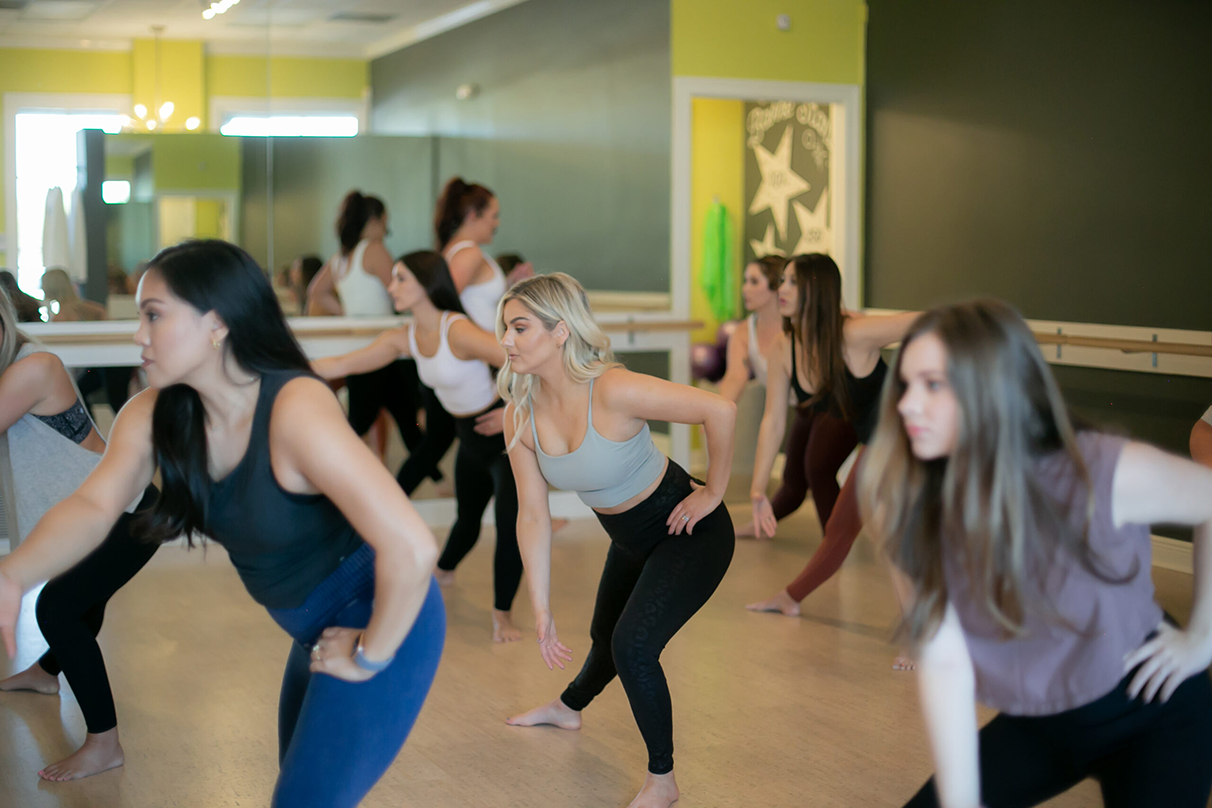
Not all barre is the same, and your format choice shapes your programming, your marketing, and the kind of instructor you need to hire.
- Pure barre method: Structured, isometric, high-repetition movements with small range of motion. Very replicable if you plan to grow to multiple locations.
- Barre fusion: Combines barre with Pilates, yoga, cardio, or strength training. Gives you programming variety and appeals to clients who want more than one workout style.
- Dance-inspired barre: Rhythm-forward, choreography-driven, music-led. Strong appeal for clients with a dance or performing arts background.
- Athletic barre: Incorporates resistance bands, heavier weights, and interval-style training. Attracts a fitness-focused crowd that wants intensity alongside the barre technique.
Pick the format that matches your background, fits your market, and excites you enough to teach it five days a week for the next five years.
Know Your Target Client
In 2026, the barre client profile has broadened significantly. While the core demographic remains women between 25 and 55, more men are attending barre classes than ever before, and studios that have leaned into gender-inclusive marketing are growing faster as a result.
Think specifically about who you are building this for. Busy professionals in an urban neighborhood want early morning and lunch classes. Suburban moms want a mid-morning schedule with a community feel. A college-adjacent market wants affordable class packs and flexible scheduling. Your client profile shapes every operational decision you make.
Step 2: Write a Barre Studio Business Plan
A business plan is not a formality. It is the document that forces you to think through every part of your business before you spend real money. Skipping it is how studio owners end up undercapitalized six months after opening.
Here are some studio metrics that every owner should track-
What Your Business Plan Should Cover
- Executive summary: Your concept, your market, and your financial goals in plain language.
- Market analysis: Who your local competitors are, what they charge, what they are missing, and why your studio fills that gap.
- Services and pricing: Your class formats, membership tiers, intro offers, and any retail or workshop revenue.
- Marketing plan: How you will attract members before and after opening, including your digital strategy and local partnerships.
- Operations plan: Your staffing structure, software setup, class schedule, and day-to-day workflow.
- Financial projections: Month-by-month revenue forecasts for your first year, your break-even point, and your cash flow plan.
Realistic Startup Cost Breakdown for 2026
Here is what you should budget for when opening a barre studio in the current US market:
| Expense | Estimated Range |
|---|---|
| Leasehold improvements and build-out | $25,000 to $90,000 |
| Ballet barres and mirrors | $6,000 to $18,000 |
| Sound system and lighting | $4,000 to $10,000 |
| Mats, props, and small equipment | $2,500 to $7,000 |
| Studio management software | $200 to $500/month |
| Branding, website, and app setup | $4,000 to $12,000 |
| Pre-launch marketing | $3,000 to $10,000 |
| Licenses, permits, and insurance | $2,000 to $6,000 |
| Working capital reserve | $15,000 to $40,000 |
| Total estimated range | $60,000 to $190,000 |
These numbers vary hugely by location (think Austin vs. Manhattan). Build in a buffer- construction almost always takes longer than expected.
Step 3: Find and Secure the Right Location
Location can make or break you in the first year.
Look for ground-floor visibility, good foot traffic, parking, 1,200-2,500 sq ft total (800-1,000 sq ft for the studio floor), and strong demographics within a 3-mile radius. Check HVAC – barre classes heat up fast.
Negotiate hard for a tenant improvement (TI) allowance. In many 2026 markets, $30-$60 per sq ft is realistic and can save you significantly.

What to Look for in a Studio Space
- Visibility and foot traffic: Ground-floor spaces on walkable streets outperform second-floor or back-of-plaza spots, especially in your first year when brand awareness is still low.
- Parking: One studio owner in suburban Texas reported losing nearly 15% of recurring clients after a neighbouring business began restricting shared parking.
- Square footage: A functional barre studio needs between 1,200 and 2,500 square feet. You need 800 to 1,000 square feet of open studio floor for a class of 15 to 20, plus reception, changing rooms, and storage.
- Demographics: Use US Census data, Google Maps, and local chamber of commerce resources to verify that your target client lives and works within a three-mile radius.
- HVAC capacity: Barre classes get warm. An underpowered air conditioning system is a member retention problem you do not want to discover in July.
Negotiating Your Lease
Most first-time studio owners lease rather than buy, and that is the right call. When you negotiate your lease, push for a tenant improvement allowance (TI allowance). This is money the landlord contributes to your build-out in exchange for a longer lease commitment. In 2026, TI allowances of $30 to $60 per square foot are realistic in many markets, which can significantly offset your startup costs.
Step 4: Get Your Licenses, Permits, and Insurance in Order
This step is not exciting, but it protects everything you are building.
Business Licenses and Legal Setup
- Form an LLC or S-corp to protect your personal assets from business liability
- Obtain a local business license from your city or county
- Secure a certificate of occupancy for your studio space
- Register for a state sales tax permit if you plan to sell retail
- Get your Employer Identification Number (EIN) from the IRS before you hire anyone
Insurance Coverage You Need
- General liability insurance: Covers client injuries on your property
- Professional liability insurance: Covers claims related to instructor negligence or programming errors
- Property insurance: Covers your equipment, build-out, and studio contents
- Workers’ compensation: Required in most US states as soon as you have employees
- Product liability: Important if you sell retail items including sticky socks, apparel, or supplements
Work with an insurance broker who specializes in fitness businesses. Annual premiums typically run between $3,000 and $7,000 depending on your location, class size, and coverage levels.
Step 5: Build Out Your Studio Space
Your space is part of the product. Warm lighting, clean sightlines, thoughtful details (plants, signature scent, great playlists) turn first-timers into regulars.
Complete Barre Studio Equipment List
Fixed studio equipment:
- Wall-mounted ballet barres (plan for one barre position per two to three clients)
- Full-length studio mirrors along at least one wall
- High-quality sound system with wireless microphone capability
- Adjustable lighting (warm and dimmable is far better than harsh overhead fluorescents)
Portable and class equipment:
- Freestanding portable barres for overflow capacity
- Non-slip exercise mats (one per client at maximum capacity)
- Light hand weights, typically one to three pounds
- Resistance bands and loops
- Small exercise balls, often called Pilates balls or playground balls
- Yoga blocks for modifications
Retail and front-of-house:
- Sticky socks for purchase and rental
- Water bottle display and retail apparel if you plan to sell merchandise
- A welcoming reception desk with clear sight lines to the entrance
Studio Design Tips That Drive Retention
Your design choices send a message about what kind of experience you deliver.
- Use warm, dimmable lighting throughout. Harsh fluorescent lighting feels clinical, not welcoming.
- Keep the studio floor completely clear. Barre clients move through space and clutter kills the flow.
- Invest in clean, well-stocked restrooms and changing areas. These small details matter more to member retention than most owners realize.
- Add thoughtful sensory details like a signature scent, live plants, and a curated playlist in the lobby. These are the things members describe when they recommend your studio to friends.
Step 6: Hire and Train Your Barre Instructors
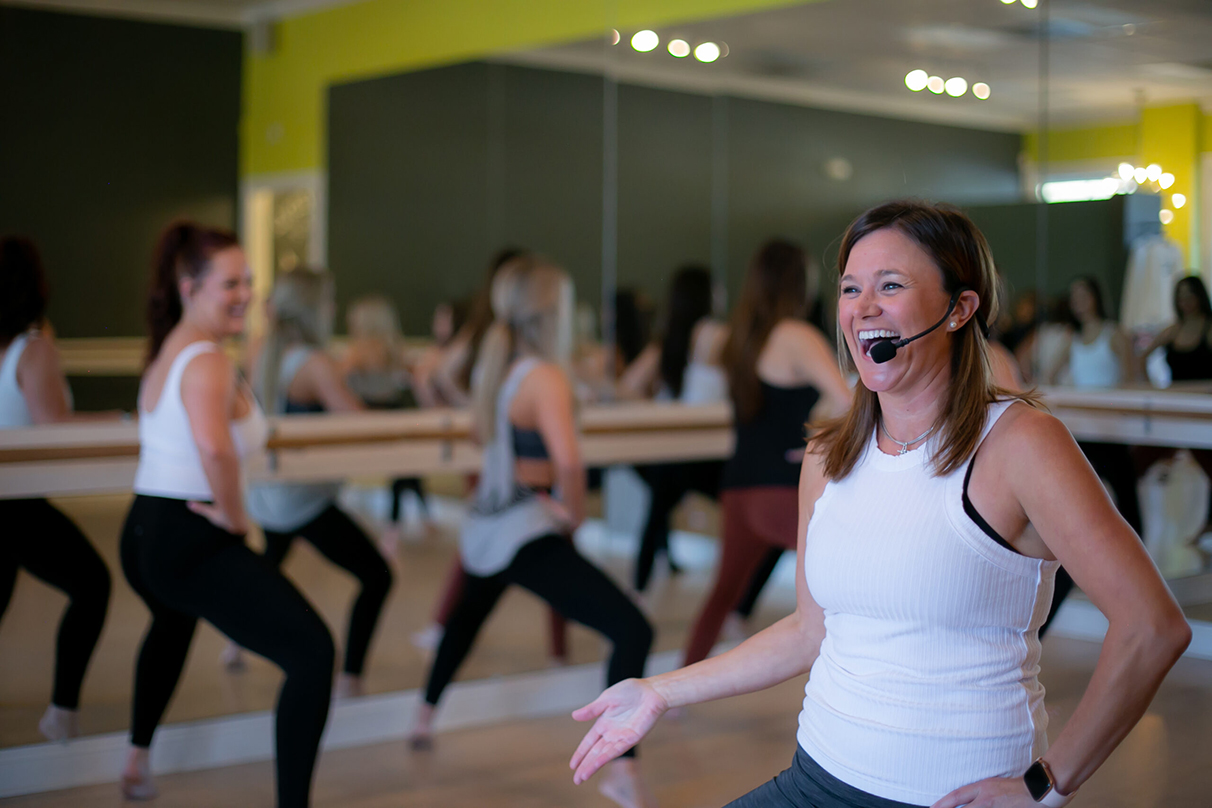
Your instructors are your brand. Look for certified, warm communicators who connect with clients and offer great modifications. Start recruiting 3-4 months early.
One exceptional instructor builds loyalty that keeps clients coming for years. One mediocre class experience can cost you a member permanently.
Require recognized barre training (Barre Intensity, Bar Method, Pure Barre pathways, etc.) plus CPR/AED. At Mariana Tek studios, we see that the best instructors create belonging and that drives retention. Check out all the barre studio software solutions provided by Mariana Tek.
2021 © Jenn Ocken Photography
www.JennOckenPhotography.com
What to Look for When Hiring
Certifications matter, but they are not the whole picture. Look for instructors who are warm communicators, musically aware, skilled at offering modifications, and genuinely invested in their clients. The best barre instructors remember names, notice when someone is struggling, and create an environment where every person in the room feels like they belong.
Start recruiting three to four months before your planned opening. Great instructors have options, and the best ones are rarely available on short notice.
Certification Standards in 2026
There is no single federally mandated certification to teach barre in the US. However, reputable studios require instructors to complete a recognized barre training program, ideally accredited through ACE (American Council on Exercise) or AFAA. Programs worth looking at include Barre Intensity, The Bar Method instructor training, and Pure Barre certification pathways.
All instructors should hold current CPR and AED certification. This is not legally required in every state, but it is an absolute best practice and some insurance providers require it.
Step 7: Set Your Pricing and Membership Structure
Pricing is one of the most strategic decisions you make, and it is worth spending real time on. Under-pricing undermines your premium positioning and puts you on a treadmill you cannot get off. Overpricing without delivering the value to match sends clients to your competitors after their intro offer ends.
Common Pricing Models for Barre Studios in 2026
- Unlimited monthly membership: The backbone of your revenue model. Typical range in the US is $160 to $280 per month depending on your market.
- Class packs: 5, 10, or 20 class bundles. A good option for clients who travel frequently or cannot commit to a full membership.
- Drop-in rate: $28 to $45 per class. Useful for visitors, gift card recipients, and undecided prospects.
- Intro offer: The single most important pricing tool in boutique fitness. A 2-week unlimited or first-month discount, typically priced between $59 and $99, lowers the barrier to entry and gets people into the habit of attending before full pricing kicks in.
- Annual membership: A discounted annual rate in exchange for a 12-month commitment. Excellent for cash flow and retention.
- Founding member pricing: Offer early access to your highest-intent prospects at a locked-in rate. This creates urgency before you open and rewards the clients who believed in you first. Also read about unique offerings that command premium pricing.
Pricing Model Comparison for Barre Studios
| Pricing Model | Best For | Avg Price (US 2026) | Retention Impact |
|---|---|---|---|
| Unlimited monthly | Committed regulars | $160 to $280/month | High |
| 10-class pack | Occasional attendees | $190 to $240 | Medium |
| Drop-in | New and visiting clients | $28 to $45/class | Low |
| Intro offer | First-time members | $59 to $99/30 days | High if converted |
| Annual membership | Long-term community builders | $1,600 to $2,800/year | Very high |
| Founding member rate | Pre-launch signups | 10 to 20% below standard | Very high |
The studios growing fastest right now are the ones that treat the intro-to-membership conversion as a defined process, not a hope. Your front desk team, your follow-up sequence, and your studio management software all play a role in that conversion.
You can also check the Mariana tek’s guide to pricing strategy for boutique fitness studios here.
Step 8: Choose the Right Barre Studio Software
This is the step most opening guides either skip or bury at the end. That is a mistake. Most studio owners spend weeks choosing flooring and mirrors but only a few hours evaluating software. That imbalance can become expensive later because your software ultimately touches every member interaction.
Why Software Is a Growth Tool, Not Just an Admin Tool?
Your software touches every single client interaction. It is how clients discover your schedule, book their first class, pay for their membership, check in at the door, receive birthday messages, and get followed up with when they go quiet. Done well, your platform makes every client feel like a VIP. Done poorly, it creates friction that quietly drives people away.
Studios that run on outdated or generic scheduling tools spend 10 to 15 hours per week on manual tasks that should be automated. That is time that should be going toward community building, instructor development, and marketing.
What Mariana Tek Delivers for Barre Studios
Mariana Tek is built specifically for boutique fitness studios, and barre is core to its DNA. Brands like Barre3 trust Mariana Tek to run their operations, which tells you something about what the platform is capable of at scale.
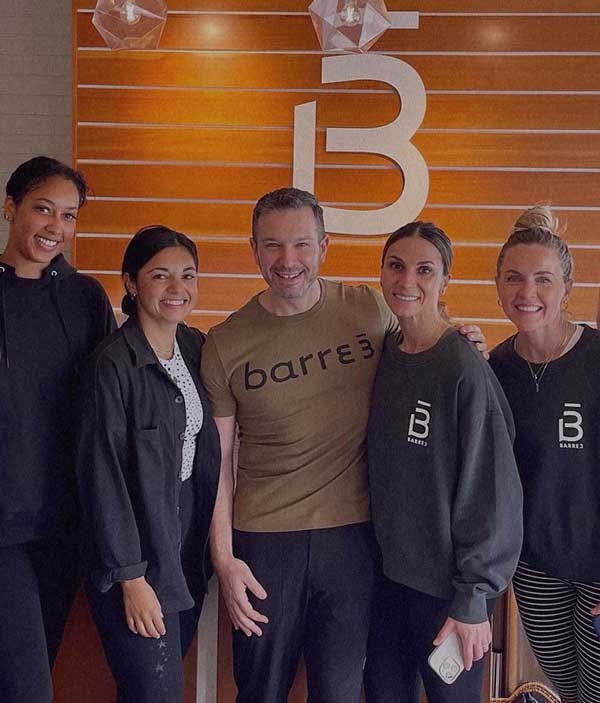
Here is what you get when you build your barre studio on Mariana Tek:
- A custom-branded app that puts your studio’s identity front and center, not a third-party booking platform
- Spot reservation technology so clients can book their favorite barre position in advance, which drives attendance consistency
- Automated billing and membership management so you never have to chase a payment manually
- Real-time reporting on attendance, revenue, retention risk, and instructor performance
- Built-in marketing automation that re-engages lapsing members before they cancel, not after
- Retail and add-on sales built into the same platform so your team can sell socks, class packs, and workshops without switching tools
Over 90% of clients at Mariana Tek studios book their own classes through the app without any staff involvement. That means your front desk team spends their time building relationships instead of managing a phone queue.
LifeCYCLE Studio switched to Mariana Tek and saw a 27.5% increase in revenue along with a 30% jump in check-ins within a single year. That is the kind of result that comes from having infrastructure that actually works.
If you are opening your first barre studio in 2026, start with Mariana Tek. Switching platforms once you have hundreds of members, active payment plans, and a year of booking history is painful and disruptive. Get the right foundation from day one. See how studios use marketing automation to grow.
Step 9: Market Your Barre Studio Before You Open
Start 60-90 days out. Build an email list with a founding member offer. Document your build-out on Instagram and TikTok. Host pop-up classes. Partner with local businesses. Optimize your Google Business Profile.
The studios that open strong treat pre-launch as the beginning of relationship-building.
Pre-Launch Marketing Tactics That Work in 2026
- Build your email list immediately. Launch a landing page the week you sign your lease. Offer a founding member rate or early access to people who sign up. Email is still the highest-converting channel in boutique fitness.
- Go all-in on local social media. Instagram and TikTok both reward location-based content in 2026. Document your build-out, introduce your instructors, show your equipment arriving, and share your story. Behind-the-scenes content generates curiosity and builds connection before you have even opened.
- Run a pop-up class. Host a free outdoor session or partner with a local business to run a class in their space. This gets your instructors in front of your target clients and lets you test your programming before opening day.
- Partner with complementary local businesses. Coffee shops, wellness studios, nutritionists, athletic apparel boutiques, and physical therapy practices all serve your target client. Cross-promote with them and offer their clientele an exclusive intro offer.
- Claim and optimize your Google Business Profile. This is free and critical. A fully optimized Google Business Profile means your studio shows up in local search and Google Maps from the moment you open.
- Use your studio management software’s marketing tools. Mariana Tek includes built-in automation that lets you schedule and send pre-launch email campaigns, set up founding member flows, and track conversion from your first inquiry to your first paid membership.
Retention Starts Before Day One
The studios that retain members long-term are the ones that build emotional connection from the very first touchpoint. Learn your founding members’ names before your opening day. Send a handwritten note or a personal email. Make them feel like they were part of building something. That level of intentionality is what turns a new member into a member who refers three friends. Want to optimize the fitness journey for you customers? Check out our guide here – Marketing for the Fitness Customer Journey
Step 10: Launch, Learn, and Scale

Your First 90 Days Framework
- Days 1 through 30: Focus almost entirely on delivering an exceptional in-studio experience. Collect feedback actively, fix friction points in your booking flow and check-in process, and make sure every instructor is showing up at their best. This is not the time to start new marketing campaigns. Nail the fundamentals first.
- Days 31 through 60: Activate your referral program. Members who have just had a great first month are in the highest-likelihood moment to refer a friend. Give them a reason to do it with a well-structured incentive, whether that is a free class, a retail credit, or a discounted month.
- Days 61 through 90: Get serious about your data. Which classes are filling fastest? Which instructors have the highest client retention scores? Which members have gone quiet and need a re-engagement touch? Your software reporting answers all of these questions. Use the insights to double down on what is working and fix what is not.
How to Think About a Second Location?
Most owners who scale to a second location do so between 18 and 30 months after opening their first. The ones who do it successfully have three things in place before they sign a second lease. They have a studio manager who can run the original location without them. They have documented systems and training processes that can be replicated. And they have software infrastructure, like Mariana Tek’s multi-location management tools, that gives them visibility across both locations without requiring them to be physically present.
Mistakes That Hold New Barre Studio Owners Back
Even well-prepared owners make avoidable mistakes in their first year. Here are the ones that come up most often.
- Underestimating the build-out timeline. Construction almost always takes longer than quoted. Add a six to eight week buffer to whatever timeline your contractor gives you and plan your marketing around that.
- Skipping the intro offer. Some owners worry that a discounted intro rate devalues their brand. The opposite is true when executed correctly. A strong intro offer with a defined conversion strategy is the fastest path to a full membership base.
- Hiring instructors too late. Recruiting and training takes time. Start three to four months before your target open date.
- Treating retention as an afterthought. Acquiring a new member costs five to seven times more than retaining an existing one. Build your retention systems, including automated follow-up through your software, before you need them.
- Choosing the wrong software to save money upfront. Generic scheduling apps are cheap for a reason. They lack the automation, reporting, and client experience features that boutique fitness studios need to grow. The cost of switching later, in time, data migration, and client disruption, far exceeds the monthly savings.
FAQs about How to Open a Barre Studio
Most US barre studios cost between $60,000 and $190,000 to open. The biggest variables are leasehold improvements, your local real estate market, and how much working capital you need to carry before reaching profitability. Studios in lower-cost markets with favorable lease terms can open at the lower end of that range.
Yes. Barre studios with strong membership retention and consistent class attendance typically reach profitability within 12 to 18 months. Monthly recurring membership revenue is the key driver, and studios with 150 or more active unlimited members generally operate at a healthy margin.
You do not need a personal certification to own and operate a barre studio. However, your instructors should be certified through a recognized barre training program, and if you plan to teach yourself, completing an ACE or AFAA-accredited program is strongly recommended.
Plan for 1,200 to 2,500 square feet total. A class of 15 to 20 clients comfortably requires 800 to 1,000 square feet of open studio floor. The rest accommodates reception, changing rooms, storage, and restrooms.
Many of the top-performing barre studios in the US run on Mariana Tek. It provides custom-branded apps, class scheduling, automated billing, marketing tools, and multi-location management in a single platform built specifically for boutique fitness.
Six to twelve months is the typical range from initial planning to opening day. The main factors that extend the timeline are lease negotiation, build-out delays, and instructor recruitment.
Core equipment includes wall-mounted ballet barres, full-length mirrors, exercise mats, light hand weights, resistance bands, small exercise balls, a quality sound system, and a wireless microphone. Sticky socks and props like yoga blocks round out the standard setup.
Start with a founding member offer and an email list well before you open. Build a local social media presence that documents your journey. Partner with complementary businesses in your area. Use your studio management software to automate follow-up and re-engagement from day one. Word of mouth and referrals become your strongest growth channel once you are delivering a consistently great experience.
Conclusion – You Are Ready to Build Something Real
Opening a barre studio in 2026 is one of the best bets you can make in the boutique fitness space. The market is healthy, independent studios are thriving, and the barrier to entry is manageable for owners who plan well.
The difference between studios that struggle and studios that scale comes down to execution. Define your concept with clarity. Choose your location carefully. Build the right team. And put the right software in place from day one so your operations run cleanly while you focus on building the community that makes everything else work.
Mariana Tek is trusted by hundreds of boutique fitness studios across the US, including leading barre brands, to handle the technology that powers their growth. If you are serious about opening a barre studio that is built to last, it is worth exploring what the right platform looks like before you open your doors.
Your community is ready for what you are building. Go build it.
Explore More Resources


by Julie Sippy Senior Marketing Manager
-
First published: June 18 2026
Written by: Julie Sippy