

No matter how perfectly you design the space or market the offerings, your private training program lives or dies on one thing above all else: The people delivering it. A well-designed private session with the wrong trainer feels like a disappointment at any price. But any session with the right trainer will keep clients coming back.
Just in case you missed the first two articles in this series:
Should Your Studio Offer Private Training? 4 Questions to Answer Before You Launch
Building the Operational Foundation for Your Private Training Program
Below, we’ll cover five tips for finding, compensating, and managing the people behind your private training program.
1) Recognize private training requires a different skill set
Teaching a group class and coaching someone one-on-one might draw on overlapping abilities, but they’re not the same job.
In a group class, an instructor is performing as much as coaching: Reading the room, managing energy, and cueing a diverse group of people through the same sequence at the same time. The best group instructors are often gifted communicators who thrive on collective energy.
Private trainers have to assess an individual’s movement patterns and limitations, design programming specific to that person’s goals, track progress over time, and adjust the plan as things evolve. The success of every session depends on how well it served that one client.
That said, it’s rare to build two completely separate staff pools. Many operators will have instructors from the existing team—people with the technical depth and relational skills—take on privates as well.
2) Look for the right combination of expertise
When hiring new staff or identifying which people on your team are suited to private training, there are a few qualities that matter most:
- Technical depth and certifications – Private training clients are paying a premium for expertise. Before staffing, you’ll need to decide what certification bar you’re setting. In modalities like pilates, comprehensive certification programs can take years and cost thousands of dollars. In other modalities like strength training or HIIT, certifications vary more widely in rigor and cost, so the bar you set is more of an active choice. The choice you make will shape who you can hire and what you’ll pay them, and what you can credibly charge clients per session.
- Relationship building – Since this is a one-to-one service, clients expect a degree of individual attention and hospitality that goes above and beyond what they’d get in a class. The best private trainers are genuinely interested in their clients as people and build a relationship of trust over time.
- Sales instincts – The studio can market the private training program, but trainers have to be involved too. Ultimately, they’re selling themselves and the value of ongoing sessions.
“The best conversions happen when a trainer can read a client, like someone who just mentioned they’re getting married next month, and naturally say, ‘Have you thought about adding a few private sessions before the wedding?’ That’s where group fitness and private training really connect.”
– Jackie Futrell, Enterprise Account Executive at Mariana Tek,
Owner of Training Mate in East Dallas

3) Understand the difference in scheduling
Instructor scheduling is more straightforward with group classes. You set the shifts, classes are assigned, and the schedule is fixed. People substitute for each other when needed. But according to Cody Stitely, Mariana Tek Onboarding Lead and owner of Motive Fit in Pennsylvania, private training operates differently. “It’s more like office hours. You’re putting in your availability and that gets shared so staff can match clients to the right trainer at the right time.”
In practice, that means each trainer defines their available windows, and then either:
- Someone fills out a lead form expressing interest (or mentions it in the studio), a manager can look at the schedule, see which trainer is available at the time the client wants, and make the match
- The trainer’s availability shows directly in the booking platform and clients can reserve a slot directly
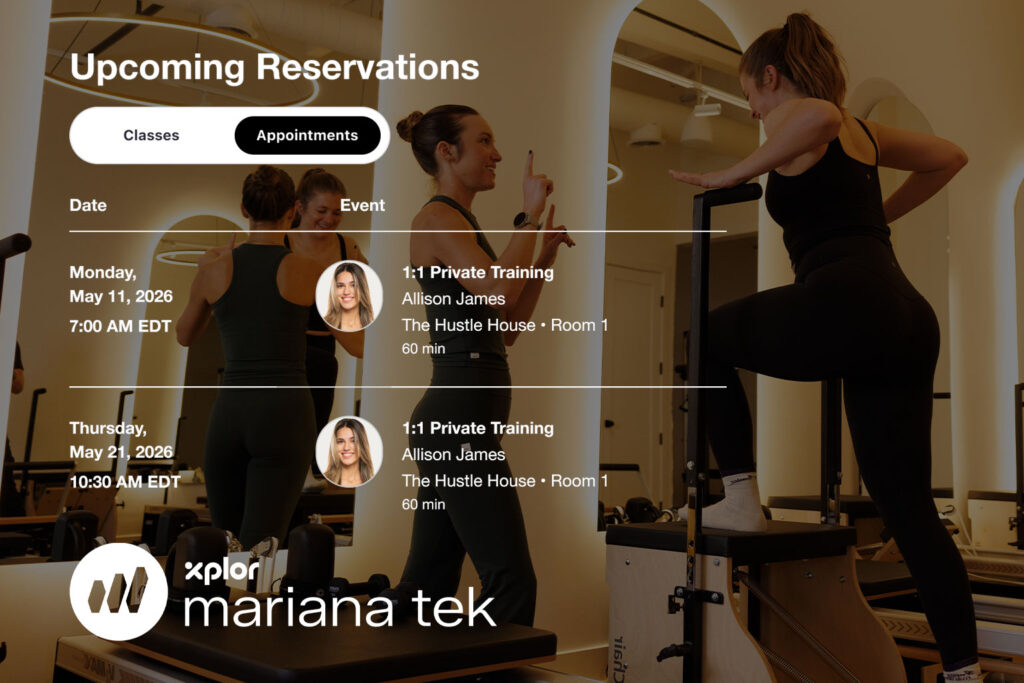
The second version requires less manual work and cuts down on the back and forth with clients. With Mariana Tek Appointments, studios can deliver a premium private training experience from booking to check-in with scheduling, availability, and trainer workflows designed for boutique fitness.
4) Structure compensation
Trainer compensation is one of the biggest cost drivers for private training. According to Jackie, the two most common structures are flat rate per session or revenue share (e.g. 50% for trainer, 50% for studio). There’s no right answer. What matters is whether the math works for your price point, session volume, and overhead.
Keep in mind that modality and certification requirements will affect trainer expectations. For example, since Pilates certifications are more rigorous and expensive than most, qualified instructors typically expect more per session. Factor this into your pricing before committing to a comp structure.
If the studio owner is the one delivering sessions, you eliminate payroll costs entirely. It’s a model that doesn’t scale indefinitely, but it can help you build the program before bringing on additional staff.
Keep schedules sustainable
TipA trainer who’s stretched across too many clients or isn’t making enough from privates to justify their time won’t stay in the role long. Structure their schedule so private training adds to their income rather than fragmenting it.
5) Keep the client relationship with the studio
In the second blog of this series, we mentioned the importance of getting your booking infrastructure right. That’s crucial for many reasons, including who owns the client relationship.
When trainer-client relationships are managed through the trainer’s personal channels—texts, Instagram DMs, personal scheduling apps, or informal arrangements—the client effectively belongs to the trainer. If that trainer leaves, they can take their clients with them. The studio loses the revenue and the relationship. It’s a hard issue to combat after the fact, which is why you need to mitigate the risk in advance.
“The booking platform is what makes the experience feel official and brand-connected, which makes it harder for a trainer to take clients with them if they leave. You maintain the relationship — you can see that someone does group classes four times a week and privates twice a week, you can segment them, you can retain them longer.”
– Jackie Futrell, Enterprise Account Executive at Mariana Tek,
Owner of Training Mate in East Dallas
All booking, communication, and client data should live on the studio’s platform. Beyond protecting against turnover, this keeps the full picture of each client’s progress and relationship with your business, so you can focus on retention and lifetime value.
What’s next?
The team is lined up and your operational foundation is ready to go. Next comes one of the trickiest topics: How do you price it?
The next article will cover pricing and packaging for private training, from industry averages by modality to which packaging structures perform best, plus how to build in flexibility so you can iterate without eroding margin.
Private Training – Staffing Checklist:
- Identify which instructors have the skill set and expertise for private training
- Define trainer availability windows and reflect them in your booking platform
- Choose a compensation structure that works at your target price point and volume
- Confirm all booking and client communication flows through the studio’s platform

by Maddy Crouch Sr Product Marketing Manager, Fitness & Wellbeing
-
First published: July 08 2026
Written by: Maddy Crouch