

The way people practice yoga has changed permanently. What started as a pandemic-era workaround, livestreaming classes from a spare bedroom, has become a genuine business model. Today’s members expect options: the energy of a room full of people on Tuesday morning, and the convenience of rolling out their mat at home on a Thursday night.
For yoga studio owners, this isn’t just a programming question. It’s an operational one. How do you schedule, price, and manage two fundamentally different class formats without burning out your instructors, confusing your members, or leaving revenue on the table?
This guide breaks down how online vs in-studio yoga classes differ from a scheduling and operations standpoint and how to run both formats in a way that grows your studio.
How Online vs In-Studio Yoga Classes Differ Operationally?
Before you can build a smart schedule, it helps to understand what you’re actually managing. Online and in-studio classes look similar on the surface same instructor and a similar sequence, but they create very different operational demands.
In-Studio Classes
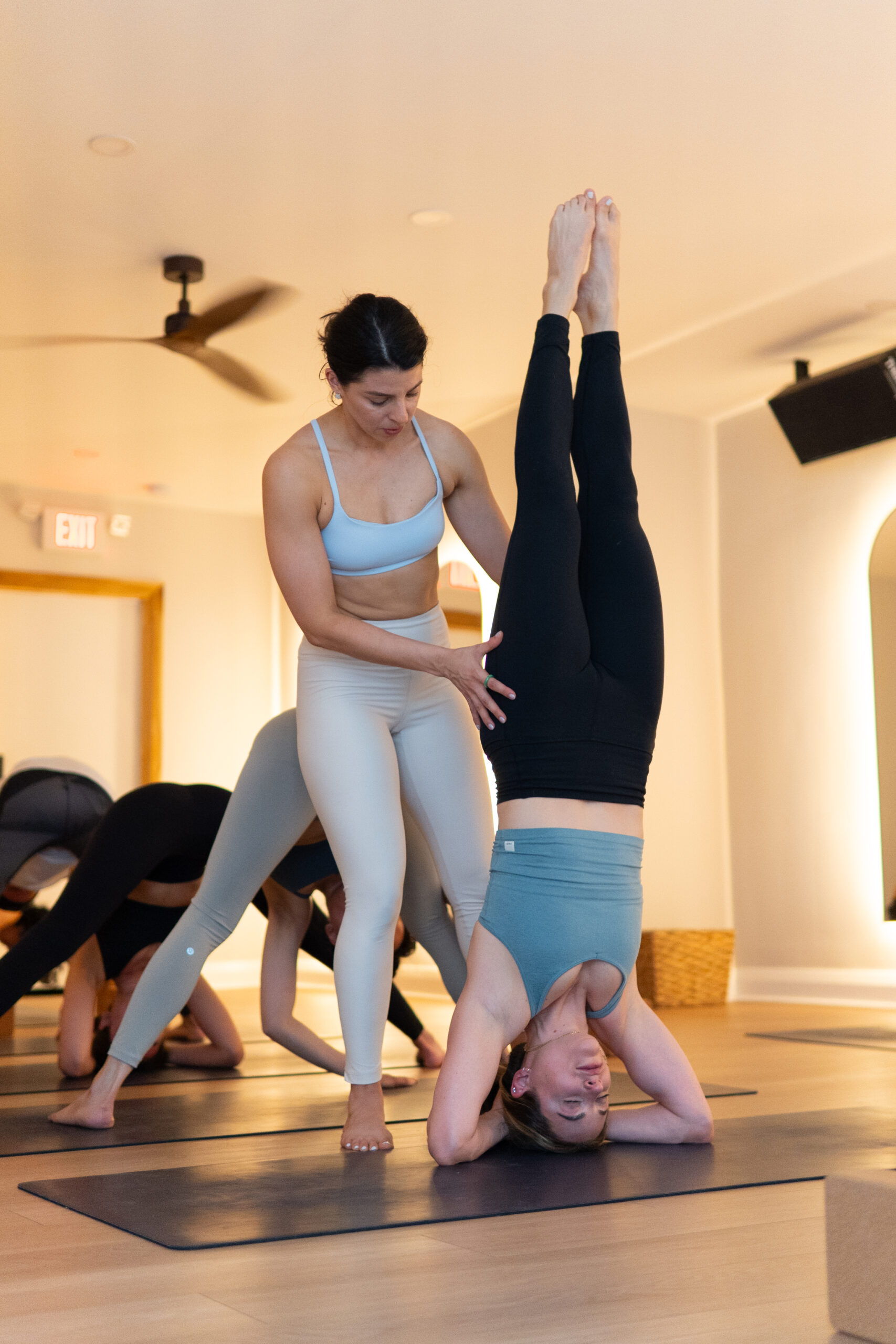
In-studio yoga is what most members picture when they book a class. There’s a physical space, a mat grid, an instructor adjusting postures, and a community atmosphere that builds loyalty over time. From a scheduling standpoint, in-studio classes are constrained and predictable: you have a fixed room, a fixed capacity, and a single time zone.
Strengths for studio owners:
- Higher perceived value allows for stronger pricing power
- Hands-on instruction increases member results and retention
- Physical attendance drives community and referrals
- Capacity limits create natural scarcity and urgency
Operational considerations:
- Room capacity limits revenue ceiling per class
- Overhead costs (rent, utilities, equipment) apply regardless of attendance
- No-shows and late cancellations have direct P&L impact
- Instructor must be physically present limited geographic flexibility for instructors
Online/Livestream Classes
Online yoga classes whether live-streamed or pre-recorded on demand, remove the physical constraints entirely. Members join from anywhere. Instructors can teach from any location. Time zones, travel, and childcare are no longer barriers to attendance.
Strengths for studio owners:
- Expanded reach beyond your local market
- Lower incremental cost per additional attendee
- Flexible scheduling of Yoga Classes across more time slots and time zones
- Keeps members engaged when they can’t make it in person
Operational considerations:
- Requires reliable tech setup (camera, lighting, streaming platform)
- Instructor delivery style needs to adapt verbal cues replace hands-on adjustments
- Booking, payments, and reminders still need to run through your core software
- Pricing is typically lower than in-studio, which affects per-class revenue
Side-by-Side Comparison: Online vs In-Studio Yoga Classes Scheduling
| Factor | In-Studio | Online/Livestream |
|---|---|---|
| Capacity | Fixed (room size) | Virtually unlimited (platform-dependent) |
| Booking lead time | Usually 12–48 hours | Can be same day |
| Cancellation impact | High (fixed cost, empty mat) | Lower (no physical overhead) |
| Instructor prep | Room setup, props | Tech check, camera framing |
| Waitlist management | Essential for popular classes | Less critical |
| Time zone considerations | Single zone | Multi-zone scheduling needed |
| Pricing | Higher (premium experience) | Lower or included in membership |
| No-show rate | Higher for late bookings | Can vary lower friction to join but also easier to skip |
| Analytics available | Attendance, retention | Attendance, completion rates, geographic data |

3 Steps to Building a Hybrid Schedule That Works
The most successful yoga studios in 2026 aren’t running two parallel schedules they’re running one integrated schedule that serves members wherever they are. Here’s how to structure it.
1. Audit Your Attendance Data First
Before you add or restructure any classes, look at what’s already happening. Which in-studio classes consistently fill to capacity? Which time slots underperform? Are there geographic patterns in who books online versus in-person?
Regional attendance data from studios on Mariana Tek shows that attendance patterns vary significantly by location. In the Southeast, late morning and late evening slots are more popular than the national average, while mid-afternoon (around 3:30 PM) sees the lowest attendance. In the Northeast, peak times cluster between 5–6 PM and 7–8 PM. If you’re scheduling online classes to supplement your studio calendar, those underperforming time slots are often the right place to start not because online classes are second-tier, but because you’re filling revenue gaps without cannibalizing your best in-studio slots.
For a deeper look at this, the Mariana Tek guide to pricing your yoga classes covers regional attendance benchmarks you can apply directly to scheduling decisions.
Dedicate Specific Slots to Each Format
Mixing formats on the fly creates scheduling confusion. Members don’t know whether a class is in-person or virtual. Instructors show up expecting one setup and get another.
The cleaner approach:
- Designate specific recurring slots as online-only, in-studio-only, or hybrid (where an instructor teaches in the room while a stream runs simultaneously)
- Clearly label each format in your booking interface so members self-select appropriately
- Avoid offering the same class at the same time in both formats unless you have the technology to manage split attention well
Build Your Timetable Around Member Behavior
A hybrid schedule should reflect when your members want to practice, not just when it’s convenient to run classes. Early mornings (6–7 AM) and evenings (5–8 PM) tend to perform well for both formats. Lunchtime online slots can perform well for remote workers who wouldn’t otherwise attend. Weekend mornings are typically strong for in-studio community classes where the social element matters.
Consider offering your most community-driven classes (think beginners, themed workshops, teacher-led series) primarily in-studio, and your more routine or flexibility-focused classes (Yin, Restorative, meditation) in a hybrid or online-only format.
Pricing Online vs In-Studio Yoga Classes
Pricing your two formats correctly matters more than most studio owners realize. Charge too much for online classes and you’ll see poor uptake. Charge too little and you devalue your in-studio offering or create confusion about what membership is worth.
A few frameworks that work well:
- Separate drop-in pricing: In-studio drop-ins carry a premium (typically $20–$30 depending on your market) while online drop-ins are priced lower ($10–$15) to reflect the different experience and reduced overhead.
- Hybrid membership passes: Members pay a single monthly rate that covers both in-studio and online attendance. This is especially effective for retention members who travel for work or have variable schedules stay engaged even when they can’t make it in-person. Hybrid passes that allow both in-person and online attendance can keep clients engaged even when they travel or work remotely.
- Online-only memberships: A lower-priced tier that unlocks livestreams and on-demand content. This is a good entry point for prospective members who want to try your teaching style before committing to a full studio membership.
- Add-on bundles: Include on-demand class libraries or recorded livestreams as a premium add-on to existing memberships, adding value without discounting your core offering.
The Mariana Tek yoga pricing guide goes deeper on tiered pricing models, intro offers, and how to align your pricing with local market rates.
Instructor Considerations: Managing Workload Across Formats
Your instructors are the product. How you structure their schedules across online and in-studio formats directly affects their quality of delivery and their retention.
Teaching online is a genuinely different skill. Without the ability to physically adjust a student’s alignment, instructors need stronger verbal cueing, better spatial awareness on camera, and comfort with the slight disconnect that comes from not seeing the room. Not every instructor makes the transition easily, and that’s okay, some genuinely prefer in-studio work. Factor that into how you build your schedule.
Practical Guidelines:
- Don’t schedule the same instructor for back-to-back in-studio and online classes without a meaningful break; the mental and technical switch can be taxing
- Train instructors specifically for online delivery, including camera positioning, lighting, verbal cueing, and managing the chat or comment function during live streams
- Consider whether to pay different rates for online vs in-studio based on prep time, tech requirements, and class size potential
- Designate one or two instructors as your “hybrid specialists” who are equally comfortable in both formats
If you’re thinking about expanding your instructor offerings, the Mariana Tek post on 1:1 personal training covers how to layer appointment-based formats alongside your group class schedule relevant if you’re also offering private online sessions.
How to Handle Bookings, Waitlists, and Cancellations Across Both Formats?
The booking experience is where hybrid scheduling either works or falls apart. Members should be able to see your entire schedule online and in-studio in one place, book their preferred format in a few taps, and receive automated confirmation and reminders regardless of which format they chose.
Here’s where most studios run into friction:
- Separate systems for online vs in-studio: If your in-studio booking runs through one platform and your livestreams through another, members have to manage two logins, two schedules, and two sets of reminders. Attendance suffers. You lose visibility into how members are using both formats together.
- Waitlist management: In-studio classes with fixed capacity need robust waitlist functionality auto-promotion when a spot opens, clear communication about timing, and easy cancellation from the waitlist. Online classes typically don’t require waitlists, but you still need cancellation workflows to keep your attendance data clean.
- Late cancellations and no-shows: For in-studio classes, late cancellations have real cost an empty mat you couldn’t fill. Having a clear late cancellation policy (and enforcing it through your software) is essential. Online classes give you more flexibility here, but consistent no-shows still affect your engagement data and instructor morale.
- Automated reminders: Both formats benefit from pre-class reminders. For online classes, consider including the class link or login instructions directly in the reminder message so members aren’t scrambling to find it five minutes before class starts.
The Revenue Case for Running Both Formats
Running online and in-studio classes in parallel isn’t just about convenience for members it’s a direct revenue diversification strategy.
In-studio classes are capacity-constrained. A 20-mat studio running a $25 class maxes out at $500 per session. Online classes have no equivalent ceiling the same instructor, the same content, a theoretically unlimited audience. For most studios the practical ceiling is much lower, but the model fundamentally changes the revenue math.
More importantly, members who engage with your studio across both formats show stronger retention. They’ve integrated your brand into more parts of their week. A member who takes in-studio classes on Tuesday and Thursday but joins your Sunday Yin livestream because they’re out of town is more embedded in your community and significantly less likely to cancel their membership than someone whose attendance depends entirely on being physically present.
The Yoga Studio Growth and Retention Guide on the Mariana Tek blog covers how to build the kind of multi-touchpoint engagement that keeps members long-term.
How Mariana Tek Supports Hybrid Yoga Scheduling?
Managing a hybrid schedule manually spreadsheets, separate booking links, chasing payments is a full-time job on top of running a studio. The operational advantage comes from having one system that handles both formats without friction.
Mariana Tek’s yoga scheduling software is built for exactly this.
Key capabilities that directly support hybrid scheduling:
- Unified calendar: In-studio and online classes live in one schedule, visible to members and staff through the same branded booking interface whether they’re on the app or your website.
- Custom-branded member app: Members book classes, manage memberships, and receive reminders from a branded app that reflects your studio, not generic third-party software.
- Flexible membership and pricing configuration: Build hybrid membership tiers, class packs that work across formats, and separate pricing for in-studio versus online attendance without needing multiple systems.
- Automated communications: Reminders, waitlist notifications, and post-class follow-ups run automatically for both formats, including format-specific details like joining links for online classes.
- Insights and analytics: Track attendance by format, identify which classes are filling and which are underperforming, and understand how members use both formats together data you need to make scheduling decisions with confidence. Mariana Tek’s Insights & Analytics features give you a real-time view across your entire schedule.
- Livestream integration: Mariana Tek supports integrations that connect your scheduling system directly to your livestream platform, so the booking-to-broadcast experience is seamless for both members and instructors.
Book a demo to see how studios like yours are using Mariana Tek to run their hybrid schedule without the operational overhead.
Actionable Steps to Launch or Optimize Your Hybrid Schedule
If you’re starting from zero or looking to sharpen what you already run, here’s a practical starting point:
- Audit your current schedule- identify your top-performing in-studio slots and your lowest-attendance windows
- Define your format rules- decide which classes will be online-only, in-studio-only, or hybrid, and commit to labeling them clearly
- Set your pricing tiers- create at least one hybrid membership option and consider a standalone online membership as an entry point
- Prepare your instructors- identify who is comfortable teaching online and invest in basic training for those who want to develop that skill
- Consolidate your tech- if you’re running separate systems for online and in-studio, evaluate the cost in time and lost visibility
- Measure and iterate- track attendance by format monthly, look for patterns, and adjust your schedule based on what members are doing

Frequently Asked Questions about Online vs In-Studio Yoga Classes
Generally, yes but not dramatically so. Online classes carry lower overhead and a different experience, so pricing them slightly below your in-studio drop-in rate is appropriate. The more important consideration is how they fit into your membership structure. Hybrid passes that include both formats tend to outperform trying to maintain a strict price separation.
The best approach is to make the in-studio experience distinctly valuable rather than trying to artificially restrict online access. In-studio yoga offers hands-on instruction, real-time community, and an energy that a screen can’t replicate. Price and market them accordingly. Members who want the full experience will come to the studio; those who want convenience will use online and both groups represent retained members, which is the goal.
There’s no universal answer, but a useful starting point is to ensure online classes don’t exceed 30–40% of your total schedule until you’ve established steady demand. Let your attendance data guide the expansion. Studios with strong local followings typically see their best results when online classes complement in-studio programming rather than mirror it.
Not necessarily, but you should be intentional about which instructors you put online. Teaching on camera is a distinct skill. Instructors who are strong on camera should lead your livestream slots; those who are exceptional at hands-on adjustment and room energy should anchor your in-studio schedule. Cross-training instructors in both formats over time gives you scheduling flexibility.
Online classes benefit from slightly longer booking windows than in-studio classes members planning a home practice often schedule further in advance. Opening bookings 7–14 days out is reasonable. For in-studio classes with tight capacity, 48–72 hours are common, though popular teachers often warrant longer windows to give your most engaged members a fair chance to secure spots.
At minimum: a reliable camera (a quality webcam or smartphone works well), good lighting (a simple ring light makes a significant difference), a clean background, and a stable internet connection. For audio, a clip-on or desktop microphone produces much better results than a built-in laptop mic. Your streaming platform and booking software should connect directly so members move from booking to class without navigating multiple systems.
Conclusion- Which is better- Online vs In-Studio Yoga Class?
The hybrid yoga studio isn’t a trend it’s the new baseline. Members expect flexibility, and studios that deliver it are building deeper loyalty and more resilient revenue streams than those that rely entirely on physical attendance.
The operational challenge is real: two formats mean more complexity in scheduling, pricing, instructor management, and technology. But with the right structure in place a clear format strategy, sensible pricing tiers, well-prepared instructors, and unified scheduling software running both formats doesn’t have to mean doubling your workload.
Start with your data. Build from what your members are already doing. Price both formats to reflect their true value. And make sure every member, whether they’re unrolling a mat in your studio or in their living room, can book their next class in under a minute.
That’s where retention lives and that’s where Mariana Tek’s yoga studio management software is built to take you.
Studios using Mariana Tek’s unified scheduling report double-digit customer growth year on year.
Explore More Resources




by Julie Sippy Senior Marketing Manager
-
First published: June 25 2026
Written by: Julie Sippy