

Pricing your yoga classes is one of the most important business decisions you will make. The right price not only covers your costs but also reflects the quality of your classes, attracts the right clients, and positions your studio in the market. Too low and you risk undervaluing your expertise. Too high without the right value proposition and you may create a barrier to new students.
The most effective pricing strategies combine a clear understanding of your costs, solid market research, and a focus on delivering exceptional value, whilst maintaining a good yoga studio profit margin. In this guide, we will walk through the key steps to setting sustainable and competitive pricing for your yoga classes, supported by real data from Mariana Tek’s Southeast Regional Data Report and Northeast Regional Data Report.
If you want to see how these insights connect to broader industry trends, tune into the Run a Smarter Studio in 2025 webinar our team hosted. You will hear directly from experts on how to use market data to strengthen your pricing strategy and grow your business.
Key Takeaways
InsightThere is no single right price for a yoga class. With the right mix of cost analysis, market awareness, and client-focused offers, you can set rates that are fair, competitive, and profitable.
How much do yoga classes cost?
This will vary across type of studio, class sizes, and location. Here’s a breakdown of the average yoga class cost:
| Class Type | Typical price range |
|---|---|
| Group class (drop-in, 60 min) | $15 – $30 per person |
| 5-class pack | $65 – $110 |
| 10-class pack | $120 – $200 |
| Unlimited monthly membership | $100 – $180/month |
| Private in-studio session | $60 – $120 |
| Private at-home session | $80 – $150 |
| Online private session | $40 – $100 |
| Workshops / specialty classes | $25 – $60 |
Mariana Tek’s regional data shows the national average group class cost is $21 in the Southeast, rising to $26 in Northeast metro markets.
1–9 Key Points:
- Know your numbers – Calculate your true cost per class before setting prices.
- Research your market – Local averages vary, such as $21 in the Southeast and $26 in Northeast metro areas.
- Offer flexible options – Include drop-ins, class packs, memberships, and introductory offers to meet different needs.
- Add value instead of lowering price – Enhance the experience to justify higher rates.
- Use offers strategically – Match promotions to peak revenue months in your region.
- Stay flexible – Adjust schedules and pricing to fit attendance patterns.
- Leverage technology – Use tools like Mariana Tek to simplify booking, payments, and retention.
- Use a pricing framework – Start with sample ranges, then adapt to your market and costs.
- Balance costs, market, and value – Align all three for sustainable pricing and long-term growth.
1. Know Your Numbers First
Before setting your class prices, you need to know exactly what it costs to run each one. This means calculating all your monthly expenses – instructor pay, rent, utilities, cleaning, insurance, equipment, marketing, and technology – then dividing by the number of classes you expect to hold each month. This gives you your minimum price per class.
Your minimum price is not necessarily the rate you will charge, but it is the baseline that ensures you are not losing money every time you teach. Once you know this number, you can layer on your desired profit margin and compare with local market rates to find the right range.
Regional insight: In the Southeast, the average class cost is $21, up $1 from the previous year. In the Northeast’s major metros, the average class cost is $26, which is $5 higher than the national Mariana Tek average of $21. These differences highlight the importance of understanding your own market rather than relying on a generic national average.
Mariana Tek’s software for yoga studios helps studio owners manage bookings, memberships, and payments in one place – making it easier to put your pricing strategy into practice and track what’s working.
2. Research the Average Yoga Class Cost in Your Market
Pricing works best when it reflects both your internal costs and the environment you operate in. Clients naturally compare your rates to other options nearby, so understanding the local market helps you position yourself with purpose.
Start by reviewing what other studios in your area charge for drop-in classes, class packs, and memberships. Consider what they offer for those prices, such as instructor credentials, class variety, and amenities. This is not about matching their rates, but about deciding how your offering fits into the landscape.
Regional insight:
- In the Southeast, the highest membership prices reached $184 per month in Tampa
- In the Northeast’s major metropolitan markets, the average cost per class is $26, which is $5 higher than the national Mariana Tek average of $21
- Studios in New York City have the highest monthly revenue in the Northeast, averaging $98,000, and earn a larger share of revenue from credits rather than memberships
For a more detailed look at how these regional benchmarks influence pricing strategies, the Run a Smarter Studio in 2025 webinar walks through market-specific examples.
3. Offer Multiple Pricing Options
Different clients have different needs, and your pricing should meet them where they are while encouraging them to commit over time.
Some visitors may want the flexibility of a single drop-in class. Others may be ready to purchase a multi-class pack for better value. Your most loyal students may choose an unlimited monthly membership to make yoga part of their regular routine. Introductory offers can bridge the gap by giving newcomers a way to try your classes at a lower cost before committing.
A balanced yoga pricing structure often includes:
- Drop-in rates for maximum flexibility
- Class packs, such as 5, 10, or 20 classes, at a reduced per-class price
- Unlimited monthly memberships for those practicing several times a week
- Introductory offers designed to attract and retain new clients
Regional insight:
- In Miami, the average client attends 6 classes before becoming a member
- In the Northeast, clients attend nearly twice that amount before converting, reflecting the higher number of available options in these dense urban markets
If your studio is in a competitive city or seasonal location, the Intro Offers That Convert guide outlines strategies to keep visitors engaged long enough to commit.
4. Add Value, Not Just Lower Price
In boutique fitness, clients are willing to pay more if they believe the value matches or exceeds the price. Lowering your rates may get short-term attention, but over time it can reduce perceived quality.
Here are a few ways to create customer value at your yoga studio:
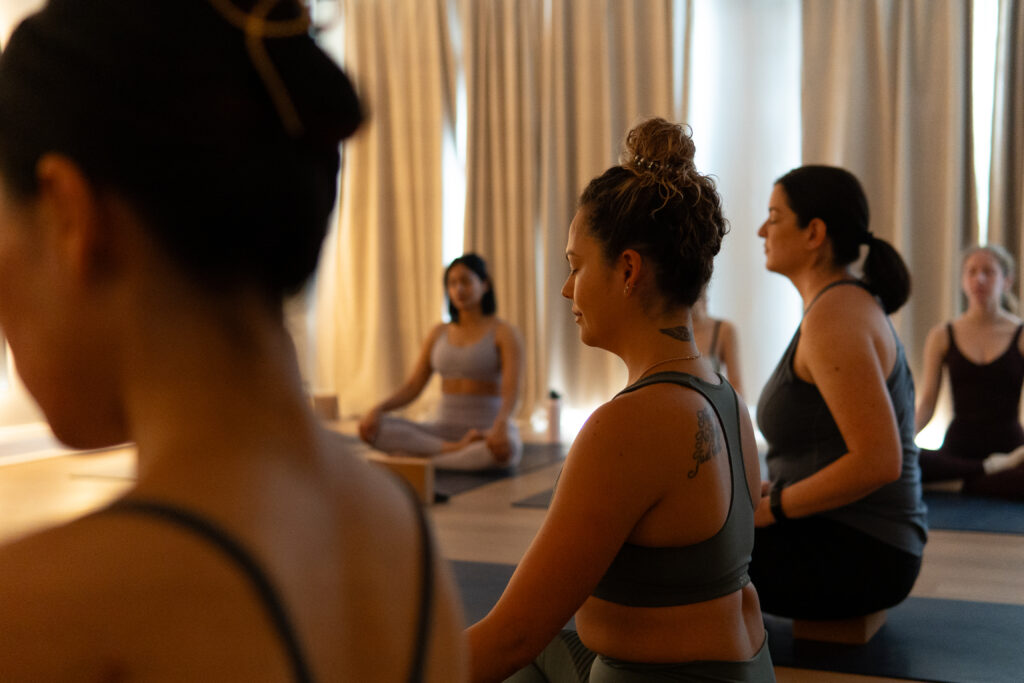
- Instructors who create a safe, supportive, and inspiring space
- A clean and welcoming environment that encourages return visits
- Small class sizes that allow for more personal attention
- Specialty offerings such as restorative yoga, prenatal yoga, or meditation workshops
Regional insight: In the Southeast, 21% of studios offer more than one modality. In the Northeast, the number is 19%. Expanding your offerings to meet different needs can raise perceived value and justify higher prices.
Instructor experience and pricing
One of the most direct ways to justify higher rates is through instructor credentials. Students intuitively understand that more experienced, better-trained teachers command higher prices – and they’re generally willing to pay for it. If your studio employs RYT-500 certified instructors, specialists in prenatal yoga, therapeutic yoga, or other advanced formats, that expertise is a legitimate pricing lever.
As a general benchmark, here’s how instructor experience typically maps to class rates in the US market:
| Experience level | Suggested group class rate | Suggested private session rate |
|---|---|---|
| Early-career (0-1 years, RYT-200) | $15 – $25 per class | $50 – $80 per session |
| Mid-level (1-3 years, additional training) | $25 – $45 per class | $80 – $100 per session |
| Senior / specialist (3+ years, RYT-500 or specialty cert) | $45 – $65+ per class | $100 – $150+ per session |
These ranges reflect drop-in and single-session pricing. Class pack and membership rates per class will typically be lower, since students are buying volume.
If you’re a solo instructor setting your own rates, use these tiers as a starting point and adjust for your local market. If you’re a studio owner building a teaching team, consider how instructor experience tiers affect both your payroll costs and the rates you can sustainably charge students.
5. Use Offers Strategically
Special offers can be powerful, but they should lead clients toward your regular pricing rather than replace it. Think of them as the first step in a longer relationship. The goal is to create a positive first impression and then transition clients into a plan that supports both their goals and your revenue.
Effective approaches include first-class discounts that remove the barrier to trying something new, bring-a-friend promotions that tap into your community, and seasonal packages or challenges that encourage consistency.
Regional insight: In the Southeast, studios see their highest revenue from November through January, making this an ideal time to launch intro offers or membership pushes. In the Northeast, November delivers the largest revenue spike of the year, often driven by Black Friday and end-of-year sales.
The upcoming Run a Smarter Studio in 2025 webinar shared strategies for timing and structuring these offers so they turn seasonal peaks into long-term membership growth.
6. Stay Flexible with Your Models
Flexibility is a strength in boutique fitness. Clients’ schedules, lifestyles, and even locations can change from month to month, and your pricing models should adapt to meet them where they are. Hybrid passes that allow both in-person and online attendance can keep clients engaged, even when they travel or work remotely. Off-peak pricing can help fill quieter time slots while making classes more accessible to price-sensitive clients.
Pay attention to attendance patterns to guide your schedule. In the Southeast, late morning and late evening classes are more popular than the national average, with 3:30 PM seeing the lowest attendance. In the Northeast, peak attendance is between 5–6 PM and 7–8 PM, with 2 PM as the least popular slot. Knowing these trends helps you make the most of busy times while using slower hours for workshops, staff training, or administrative work.
7. Support Pricing with Purposeful Technology
The right technology does more than manage bookings and payments. It is a bridge between your studio’s vision and your clients’ daily experience. A branded app or platform reinforces your studio identity, simplifies class registration, and keeps enrollment and retention running smoothly while strengthening the value you deliver.
When promotions, reminders, and renewals happen seamlessly, students are more inclined to buy class packs or commit to memberships that serve both their goals and yours.
M3 Studio in Athens and Atlanta built its brand on playfulness. Co-owner and teacher Matt Chambers shared how adopting Mariana Tek’s gamification tools transformed their slow summer season into one of their strongest periods:
“We run a summer challenge every year because it’s our slowest time… adopting Mariana Tek and its new gamification suite allowed the team to move their challenges 100 percent online. Every student’s activity was automatically recorded… People enjoyed being able to track progress and see their friends’ updates in the app. With 500 cards on the wall, it was hard to pick out your friends. Now it’s easy.”
With features like leaderboards and digital challenge tracking, M3 Studio saw a 31% increase in visits year-over-year during summer 2024, along with a 15% increase in membership renewals among challenge participants.
You can read the full story in the M3 Studio Gamification Success Story.
8. Example Pricing Framework for Yoga Studios
Here is a guideline for pricing your yoga studio classes and memberships:
| Model | Price Range* | Best For |
|---|---|---|
| Drop-in | $15 – $25 per class | Flexible, casual visitors |
| 5-Class Pack | $65 – $110 | Semi-regular clients |
| 10-Class Pack | $120 – $200 | Regular attendees looking for value |
| Unlimited Monthly | $120 – $180 | Committed practitioners |
| Premium Membership | $200+ | Includes perks like workshops or private sessions |
| Private in-studio (60 min) | $60 – $120 | One-on-one personalized instruction |
| Private at-home (60 min) | $80 – $150 | Includes instructor travel time |
| Private online (60 min) | $40 – $100 | Virtual one-on-one |
| Workshops / specialty classes | $25 – $60 per person | Themed or advanced sessions |
| Online live group class | $10 – $25 per person | Remote clients, lower overhead |
*Pricing varies by location, market demand, and instructor experience.
These ranges provide a starting point. Use your own cost analysis and regional benchmarks to refine them for your market.
9. Key Takeaways
The best pricing strategy for a yoga studio is built on three pillars: your operating costs, your market, and the value you provide. Regional benchmarks from our Southeast Report and Northeast Report can help you see exactly where you stand.
Pair these insights with strategies from our Intro Offers That Convert guide to move clients from trial to membership, and the Run a Smarter Studio in 2025 webinar to learn from industry experts about using community and data to grow in the year ahead.
Lead the Market with Value-Driven Pricing
TipWhen your pricing reflects your true value and is supported by a clear strategy, you are not just competing in the market, you are leading it.
A 30-minute class typically runs $10 – $18 per person for a group format. For private sessions, expect $35 – $65 depending on location and instructor experience. Because 30-minute classes are often used as intro or lunchtime formats, pricing toward the lower end of your market range can help drive trial sessions.
A standard 60-minute group class typically ranges from $15 – $30 per person at most US studios, with boutique urban studios often sitting at $20 – $30. Mariana Tek’s data puts the national average at $21, with Northeast metro markets averaging $26.
The average drop-in yoga class in the US costs between $15 and $25. Regional factors vary significantly – Southeast studios average around $21 per class, while major Northeast metros average $26, according to Mariana Tek’s 2025 regional benchmarks.
Drop-in rates for studio yoga classes typically range from $15 – $30, while unlimited monthly memberships run $100 – $180. Private sessions command significantly more at around $60 – $120 for in-studio, and $80 – $150 for at-home sessions.
Most yoga studios aim for a gross profit margin of 30 – 50% per class after instructor pay and other fixed costs. This means your pricing must account for all overhead – rent, utilities, yoga insurance, software, marketing – before layering in profit.
Most studios pay instructors $25 – $50 per class for group sessions, rising to $50 – $75+ in premium markets. Some studios use a percentage model (e.g., 50 – 70% of per-class student revenue). Instructor pay is one of your largest cost inputs, so it should inform your pricing before anything else.

by Xplor Mariana Tek
-
First published: August 07 2025
Written by: Xplor Mariana Tek