

A canceled Pilates booking isn’t just an empty spot on a mat or reformer. It’s lost revenue, a disrupted class energy, and a missed opportunity for someone on your waitlist.
As Pilates studio cancellation policies become a top priority for US boutique fitness owners in 2026, studios that still rely on manual tracking and loose no show rules are leaving money on the table every single week.
Pilates remains the dominant force in boutique fitness: roughly 43% of boutique studios now list Pilates as their primary class format, making class capacity across mat, reformer, and equipment based sessions one of the most valuable, and most perishable, assets a studio owns. Once a class starts, that spot can never be sold again. This guide breaks down the operational strategies, fee structures, waitlist systems, and automation tools US Pilates studios use to reduce Pilates cancellations, no shows, protect cash flow, and keep every reformer full. Whether you run a classical mat Pilates program, a full reformer studio, or a hybrid schedule mixing springboard, tower, and Lagree sessions, the same rule applies: once a class starts, that spot can never be sold again.
Why Late Cancellations Are a Bigger Problem Than They Look
Cancellations aren’t just an inconvenience. They’re an industry-wide retention challenge. Across the broader fitness industry, gym cancellations rose 8% year over year in 2026, a trend analysts point to as a sign that retention, not acquisition, is now the binding constraint on profitability for fitness operators. Boutique studios fare somewhat better than big box gyms. Boutique studios historically report retention rates around 75 to 76%, compared to roughly 71.4% for all gyms industry wide, but even strong studios bleed revenue when a meaningful share of bookings turn into late cancels or no shows.
The math is unforgiving in a reformer studio because each machine represents a fixed, finite number of sellable spots per day. Unlike a large group fitness room, you can’t quietly absorb a few empty machines without it showing up in your P&L. That’s why studios with structured, automated cancellation policies consistently outperform those relying on front desk goodwill and a paper waitlist.
1. Core Strategies to Reduce Pilates Cancellations
Enforce Strict, Clear Cancellation Windows
Standardize your class policies so members must cancel within a defined window rather than negotiating case by case. A common industry standard is a 12 hour window for standard group classes, whether mat or reformer, and a 24 hour window for premium private or duet sessions, since these carry higher instructor cost and per spot revenue.
Whatever window you choose, communicate it everywhere a client touches your brand: onboarding email, app waiver, booking confirmation, and studio signage. Ambiguity is what causes pushback at the front desk, not the policy itself.
Implement Penalty Fees for Accountability
A policy without a consequence rarely changes behavior. Apply financial accountability consistently: deduct a full class credit from package holders who cancel late, and charge a flat late cancellation fee, such as $15, for unlimited members. The fee doesn’t need to be punitive. It needs to be predictable, automatic, and tied directly to the value of the spot that went unfilled.
Automate Multi Wave Reminders
Don’t rely on clients remembering their own schedules. Use your booking platform to send automated SMS or push notifications 24 to 48 hours before the scheduled session, then a second nudge 1 to 2 hours before class as a final chance to cancel within the allowed window. This two stage system catches forgetful clients early while still giving the studio enough lead time to fill the spot if someone does drop.
Auto Fill Waitlists Instead of Manual Tracking
Let your booking system automatically move the next client on the waitlist into a canceled spot the moment it opens up. The software should handle the SMS or email confirmation itself, minimizing the back and forth manual tracking that eats up front desk time. This single feature converts a cancellation from a pure revenue loss into a recovered booking, and it’s often the highest leverage automation a reformer studio can implement.
How to Set Up a Waitlist That Actually Works?
A waitlist only works if it moves fast enough to matter. A few practical rules:
- Set the waitlist to notify the next client within seconds of a cancellation, not minutes, since reformer spots get claimed quickly in popular time slots.
- Give the notified client a short, defined response window, often 5 to 15 minutes, before the spot rolls to the next person in line.
- Stop auto filling roughly 1 to 2 hours before class start. This prevents a client from being added at the last minute to a class they’ve already made other plans around, which can unintentionally trigger a late fee for the very person you’re trying to help.
- Cap how many classes a single client can be waitlisted for at once, so the same handful of engaged members aren’t crowding out everyone else’s chances.
- Track waitlist conversion data over time. If a particular class time consistently has a long waitlist, that’s a signal to add capacity or a second session, not just a scheduling quirk.
Prioritize Memberships Over Drop Ins
Shift your business model away from casual drop ins where possible. Clients with recurring monthly memberships build consistent workout routines and are significantly less likely to cancel than one off purchasers. This shows up in broader fitness data too: members who participate in group classes are 56% less likely to cancel than those who only work out solo, and the structure of a recurring membership reinforces that same habit loop. It also pays off financially, since the average boutique member spends 2.3 times as much per month as a traditional gym member. For more on building this kind of routine into your client base, see Mariana Tek’s guide to Pilates marketing strategies.
Require a Payment Method at Booking
Studios that require a valid card on file at the time of booking, rather than pay at the studio, consistently see fewer no shows. When there’s financial skin in the game before a client even arrives, the decision to skip class without notice carries a real cost rather than just a missed workout.
2. Create a Cancellation Policy Clients Understand and Respect
The studios that get the least pushback on fees aren’t the ones with the loosest policies. They’re the ones with the clearest ones. A policy clients respect usually shares three traits:
- It’s visible before booking, not after. Clients should see the cancellation window and fee structure during signup and at the moment they book a class, not discover it for the first time when they’re charged.
- It’s framed around fairness, not punishment. Position the policy as protecting access for the whole community, for example “this ensures every member gets a fair shot at a full class,” rather than as a penalty aimed at any one person.
- It’s applied consistently by the system, not by staff judgment. When fees are charged automatically by the booking software rather than decided case by case at the front desk, clients are far less likely to view it as personal or unfair, and staff avoid the awkward position of enforcing rules manually.
Studios building out a policy from scratch can also reference Mariana Tek’s broader Pilates studio business plan guide, which covers how cancellation and pricing policy fit into your overall operating model.
Set Late Cancellation Fees That Feel Fair
The goal of a fee isn’t to maximize revenue from cancellations. It’s to make a late cancel cost roughly what an empty reformer actually costs the studio, while leaving room for genuine emergencies.
How to Apply Fees by Client Type
| Client Type | Action | Typical Penalty | Best Practice |
|---|---|---|---|
| Class Pack or Drop in (Mat class or reformer class) | Late cancel within 12 hours | Forfeit one class credit | Deducted automatically by the system, no staff involvement |
| Unlimited Member | Late cancel within 12 hours | $15 charge | Waive the first offense per month as a courtesy |
| Any client | No show, no notice | $20 to $25 charge | Set slightly above the late cancel fee to discourage ghosting |
| Private or Duet session | Late cancel within 24 hours | Full or partial session forfeiture | Use a longer window given the higher per spot revenue |
A tiered structure like this protects revenue while still giving loyal clients room for a genuine emergency, which is usually what keeps a policy from feeling punitive in the first place.
3. How Scheduling Software Makes These Rules Work Automatically
A cancellation policy is only as strong as the system enforcing it. Manually tracking who canceled late, who owes a fee, and who’s next on the waitlist doesn’t scale past a handful of Mat Pilates/Reformer classes a week, and it’s where most front desk friction with clients actually comes from.
This is where a purpose built booking platform like Mariana Tek’s Pilates studio software changes the equation for US Pilates studios running everything from mat only schedules to full reformer, tower, and private apparatus programs.
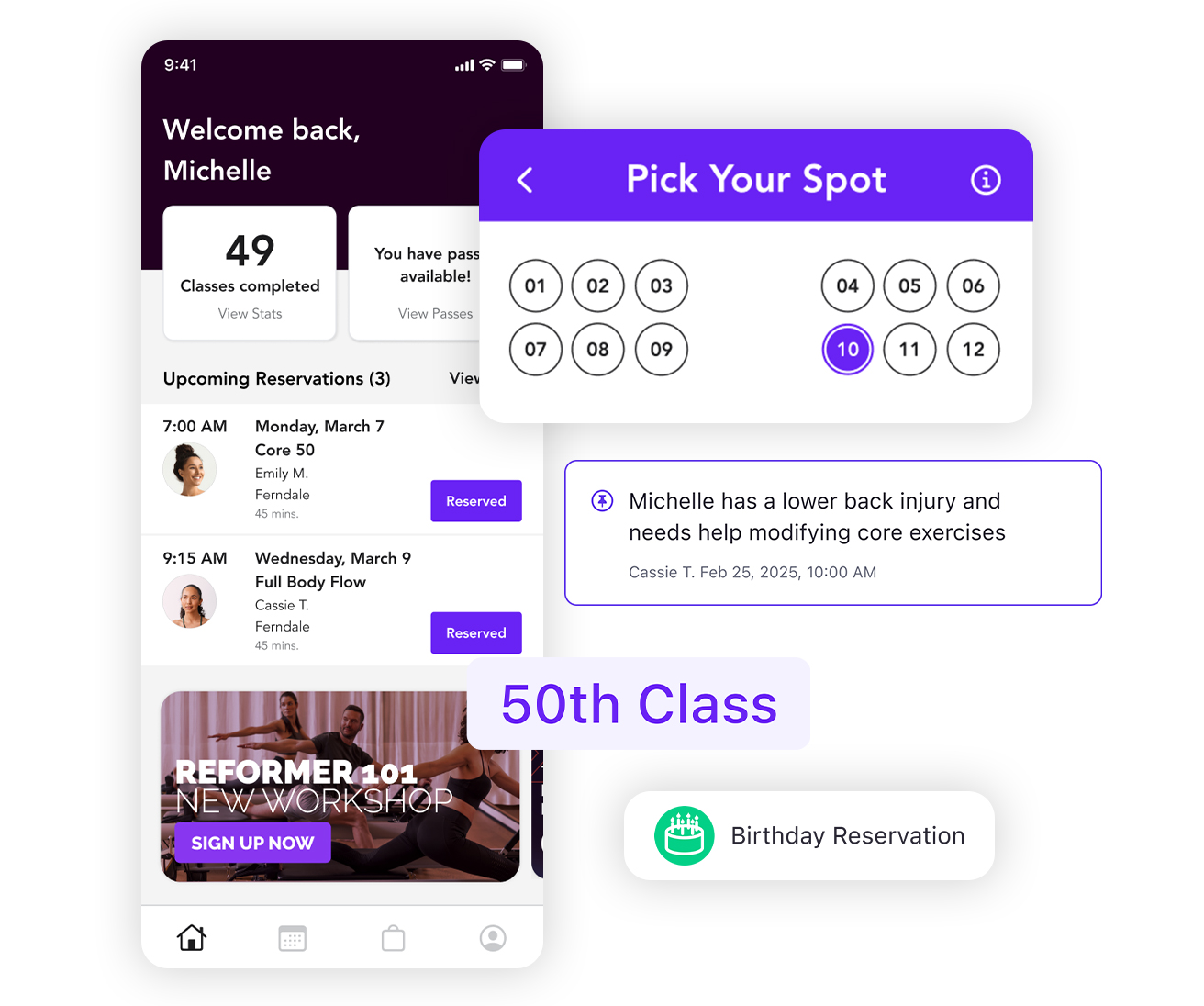
- Customizable policy enforcement. Apply distinct cancellation rules for drop ins versus unlimited members, with fees charged automatically and no awkward front desk conversations.
- Branded client app experience. A sleek, studio branded app makes checking in, modifying bookings, or checking waitlist position frictionless, which keeps clients engaged rather than frustrated.
- Real time waitlist automation. Open spots are filled the moment someone cancels, maximizing reformer utilization without staff intervention, all managed through the staff facing Biz App.
- Geo fenced check ins. Clients are automatically checked in when they walk through the studio doors, minimizing accidental no shows caused by check in friction.
- Reporting on attendance patterns. Owners can see which classes consistently run long waitlists or high late cancel rates, turning policy enforcement into a data driven decision rather than a guess.
Studios making the switch see this play out in practice. Core by Ceri, a strength led Pilates studio, used Mariana Tek’s Biz App to manage cancellations, substitute teachers, and booking histories from a single dashboard while keeping the client experience seamless. Similarly, Pilates House in Baltimore streamlined its operations and improved brand alignment after integrating Mariana Tek’s technology. For more on how Pilates demand and class fill rates are trending nationally, see Mariana Tek’s 2026 Pilates Industry Report.
FAQs about How Studios Can Reduce Pilates Cancellations
Frame the policy around community courtesy and equipment access. Language like “ensuring every member gets a fair shot at the class” resonates better than a purely punitive tone. Use software that lets you automatically forgive a client’s first slip up each month, which preserves goodwill without undermining the policy itself.
Most studios stop auto filling 1 to 2 hours before class start. This prevents clients from being added last minute to a class they’ve already made other plans around, which can unintentionally trigger a late fee for the person you’re trying to help.
A 12 hour window is standard for group reformer/Pilates classes in the US market, with a 24 hour window common for private or duet sessions, where the per spot revenue and instructor cost are higher.
Yes. Recurring members build a habitual routine around their booked classes, and group class participants in general are 56% less likely to cancel than solo gym goers, which is part of why membership first models outperform drop in heavy studios on attendance consistency.
Not necessarily. Many studios scale fees by client type. Class pack holders forfeit a credit, unlimited members pay a flat fee, and no shows are charged slightly more than late cancels to discourage complete ghosting. The structure should reflect the actual revenue at stake for each booking type.
Yes. Requiring a valid card on file at the time of booking is one of the most effective ways to reduce no shows, since it removes the no consequence mentality that comes with pay at the studio models.
The Bottom Line- How Studios Can Reduce Pilates Cancellations
Every open reformer is a small leak in your studio’s revenue. The studios staying ahead of that trend are the ones pairing a clear, enforceable cancellation policy with software that automates reminders, fees, and waitlist fills without adding work for front desk staff.
By establishing firm cancellation windows, automating multi wave reminders, building a fair fee structure by client type, and leveraging a platform built for boutique studios like Mariana Tek’s Pilates studio software, you protect your cash flow, respect your instructors’ time, and build a more committed Pilates community.
Ready to bulletproof your studio’s schedule? Book a demo with Mariana Tek to see automated waitlist and retention tools in action, or explore more strategies on the Mariana Tek blog.

by Julie Sippy Senior Marketing Manager
-
First published: August 18 2026
Written by: Julie Sippy