

Designing a Pilates studio goes beyond aesthetics – it’s a strategic decision that directly shapes client experience, retention, and the long-term success of your business. A well-executed Pilates studio interior design reflects the core principles of the practice itself: precision, flow, control, and balance.
Before a single piece of equipment is placed or a wall is painted, the most successful studio owners start with a clear vision: who are their clients, what kind of movement experience do they want to create, and how should every design element serve that goal? Whether you’re opening a new studio or redesigning an existing one or refreshing an existing one, this guide walks you through the Pilates studio design ideas that matter most.
Before You Design: Define Your Studio Goals
Every design decision you make – from floor plan to color palette – should flow from a clear answer to one question: what kind of experience do you want clients to have the moment they walk in?
Are you positioning your studio around rehabilitation and therapeutic movement, high-performance reformer training, or a calming, mindfulness-forward boutique experience? Your answer shapes everything. A clinical rehab-focused studio will prioritize accessibility, open sightlines, and neutral finishes. A high-energy reformer studio might lean into sleek equipment rows, bold branding, and an energized atmosphere.
Before you commit to any specific layout or aesthetic direction, establish clear foundational decisions by documenting the following:
- Your studio’s primary focus – mat-based, reformer-based, or a hybrid approach
- Your target client – beginners, athletes, rehabilitation patients, or a general wellness audience
- Your brand identity – minimal and modern, warm and coastal, urban and editorial, or another aesthetic direction
- Your capacity goals – how many clients per class, how many classes per day
This clarity will guide every subsequent design choice and prevent costly changes later. If you’re unsure where to start, consulting with an interior designer who has experience in wellness or fitness spaces can be a valuable early investment.
1. Prioritize Space and Layout
Pilates requires ample room for movement, particularly when using equipment like Reformers, Cadillac machines, and barrels. A spacious and open floor plan ensures that clients can move freely without feeling cramped, creating a calm and relaxed atmosphere.If you’re building your studio from scratch, learn how Mariana Tek supports Pilates studios from day one.
Key Tips:
- Equipment Placement: Place large equipment such as Reformers along the walls, leaving the center of the studio for mat work. This layout allows for flexibility in class types and encourages flow in movement.
- Circulation Paths: Ensure there’s enough space between equipment and along walkways for smooth client traffic and instructor movement.
- Mat Storage: Create a designated area to store mats, props, and smaller equipment like Pilates balls and magic circles.
How Much Space Does a Pilates Studio Actually Need?
Understanding the real numbers behind your floor plan is essential before signing a lease or beginning a renovation.
Here are the key benchmarks to plan around:
- For mat-based Pilates: Each mat area requires roughly 40–50 square feet to allow full range of movement, including exercises that require fully extending arms and legs.
- For Reformers: A single reformer requires approximately 40–50 square feet, including clearance for the instructor. Leave a minimum of 6 feet behind each reformer and 2 feet on either side.
- For additional apparatus: Equipment like Cadillac machines or Wunda Chairs typically requires 50–70 square feet per piece, accounting for the movements performed around them.
Studio Size Benchmarks:
- A small Pilates studio of 800–1,000 sq ft can comfortably fit 4–6 reformers plus a small mat or stretch area, plus reception space
- A 500 sq ft studio can fit approximately 8–10 reformers if the layout is maximized
- A studio of roughly 1,200 sq ft can accommodate 20–25 clients simultaneously across equipment and mat spaces
Ceiling height: Aim for at least 9 feet of ceiling clearance. Some reformers stored vertically require 8 feet minimum.
Planning for growth: Design your layout with future expansion in mind. Choosing multi-functional equipment like combo reformer/Cadillac units can give you more programming flexibility without requiring more floor space. When the time comes, here are 5 growth tips for boutique fitness brands worth planning around from the start.
Small Pilates Studio Design: Making Limited Space Work
If you’re working with a smaller footprint, don’t compromise on the client experience – instead, focus on intentional space planning:
- Go vertical with storage– wall-mounted racks for props, bands, and mats free up valuable floor space
- Choose foldable or stackable reformers– several professional-grade models fold flat against the wall when not in use
- Use mirrors strategically– floor-to-ceiling mirrors on one or two walls create the perception of a significantly larger space
- Keep the color palette light– pale walls, light flooring, and good lighting make compact spaces feel airy rather than cramped
- Limit prop variety on display– store secondary props out of sight and keep only session essentials accessible
2. Natural Light and Soothing Lighting
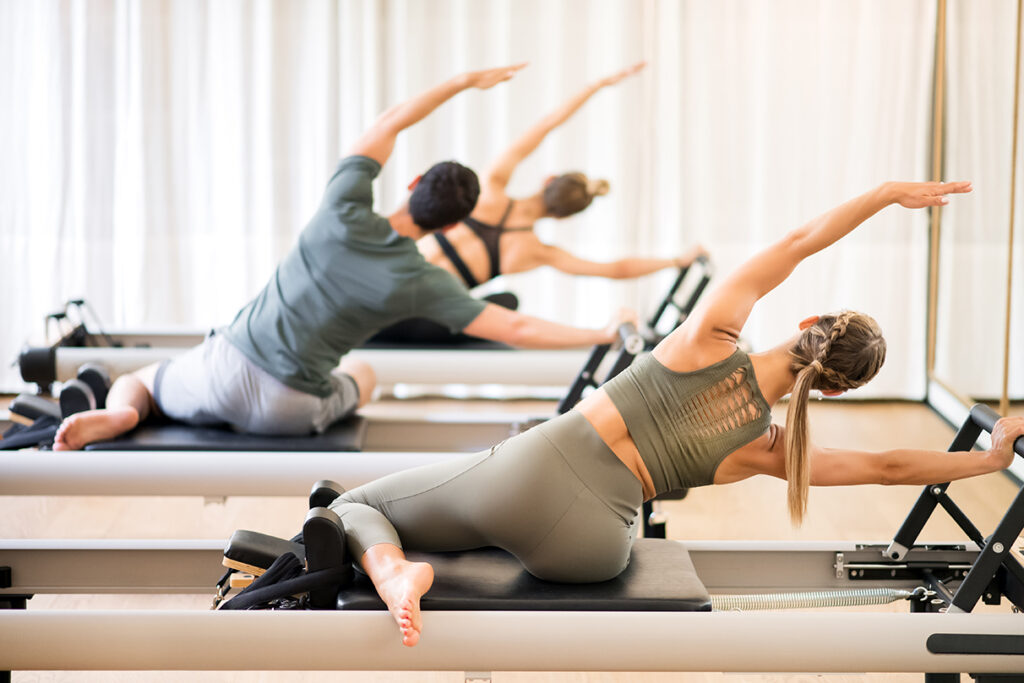
Lighting plays a key role in creating an atmosphere that feels serene and energizing. Natural light is ideal, as it creates a fresh, open feel, but even if your studio lacks large windows, there are ways to enhance the lighting.
Key Tips:
- Maximize Natural Light: If possible, choose a space with large windows to flood the studio with daylight. Light, sheer curtains or blinds can provide privacy while still allowing light to filter in.
- Supplement with Soft Lighting: Use soft, warm lighting for early morning or evening sessions. Avoid harsh fluorescent lights that can feel sterile. Dimmable lights are also a great way to adjust the ambiance depending on the class and time of day.
- Consider Circadian Impact: Lighting does more than set a mood- it influences energy levels and alertness. For morning classes, brighter, cooler-toned light supports wakefulness and focus. For evening sessions, warm and dimmed lighting supports wind-down. If your studio runs classes throughout the day, investing in a programmable lighting system that adjusts color temperature and brightness by time of day is a worthwhile long-term upgrade for client wellbeing.
- Mirrors: Placing mirrors strategically not only helps clients check their form, but it also reflects light, making the space feel larger and brighter.
- Himalayan Salt Lamps or Candle Lighting (for specialty sessions): For restorative or private sessions, soft accent lighting creates an intimate and calming atmosphere that feels distinct from a standard group class setting.
3. Choose Calm, Neutral Colors
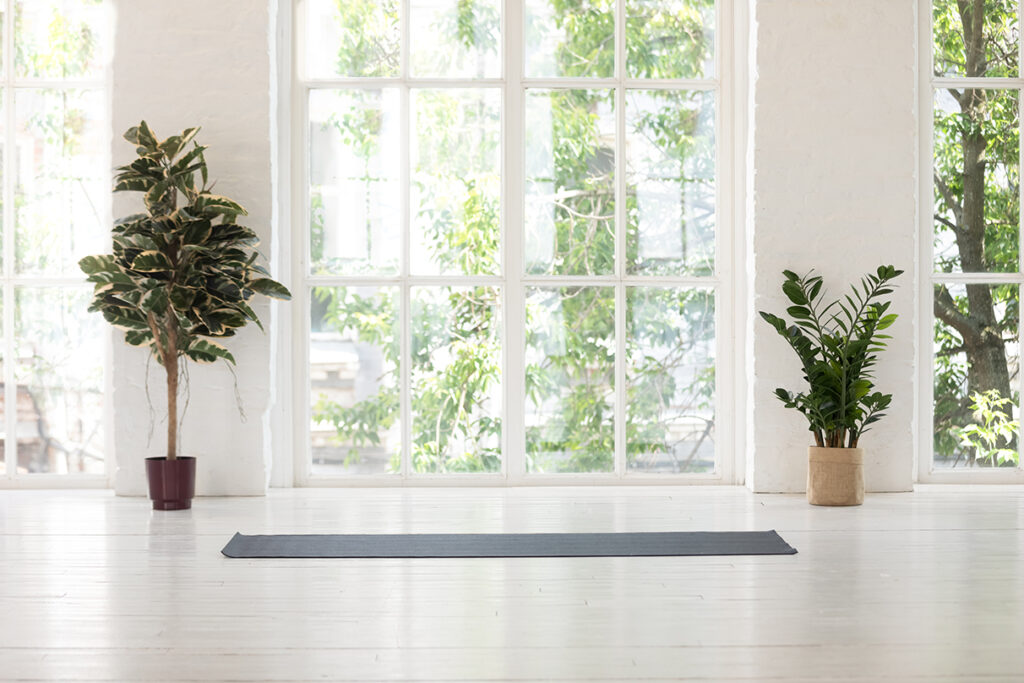
The color palette of your Pilates studio should reflect the calming and restorative nature of the practice. Neutral tones like whites, beiges, soft grays, and light pastels work best to create a tranquil environment that allows clients to focus on their bodies and breath.
Key Tips:
- Soothing Palette: Opt for calming colors on walls and floors. Consider accent colors in artwork, props, or branding elements for subtle contrast.
- Natural Elements: Incorporate wood finishes, bamboo, or other natural materials to bring warmth and balance into the space.
- Design for Your Brand: Your color choices aren’t just aesthetic – they signal who your studio is for. A minimalist palette of whites and warm woods communicates a premium, considered experience. Earthy tones and natural textures attract wellness-focused clients seeking restoration. Whatever you choose, ensure it’s consistent with your logo, website, and social media presence – tools like Mariana Tek’s Marketing & CRM can help carry that brand consistency across every client touchpoint beyond the studio walls. Clients who see your studio online before visiting should feel an immediate sense of recognition when they walk through the door.
4. Functional Flooring
The type of flooring you choose is crucial for a Pilates studio. Clients spend much of their time either standing or lying on the floor, so comfort and safety are key. Pilates movements also involve balance and core work, which requires stable footing.
Key Tips:
- Cushioned, Non-Slip Flooring: Rubber or cork flooring is ideal, as it provides both cushioning for mat work and non-slip stability. These materials also absorb impact and reduce noise.
- Wood Floors: If your studio primarily offers equipment-based Pilates, wood floors can add elegance and are easy to clean. Just ensure mats are used for cushioning when needed.
- Accessibility Matters: Ensure your flooring transitions (between reception and studio areas, for example) are smooth and flush- no raised edges that could cause trips. This is especially important for clients with mobility considerations and is often part of local building and disability access requirements. Consult your local regulations before finalizing flooring choices.
5. Incorporate Storage Solutions
Pilates studios often require a variety of props and equipment, so keeping your space clutter-free is essential for a calm atmosphere. Incorporating smart storage solutions will help maintain a clean, organized studio.
Key Tips:
- Built-In Shelving: Wall-mounted shelves are perfect for storing props like resistance bands, blocks, and Pilates balls. Vertical storage keeps items easily accessible but out of the way.
- Hidden Storage: Use benches or cabinets with hidden compartments to store towels, mats, and smaller equipment when not in use. It helps declutter the studio and makes it more visually appealing.
6. Design for Accessibility and Inclusivity
An inclusive Pilates studio isn’t just a legal consideration – it’s a business opportunity. When your space is genuinely welcoming for clients with mobility challenges, you open your doors to a wider community and demonstrate the kind of values that build long-term loyalty.
Accessibility is about more than meeting minimum legal requirements. Here are key areas to consider when designing an inclusive Pilates studio:
- Clear pathways throughout the studio with no equipment or props encroaching on walking routes, leaving at least 36 inches of clear path
- Adaptable equipment placement – ensure at least some reformers can be accessed from both sides and have adequate lowering capability for clients who find ground-level transitions challenging
- Clear, legible signage – good lighting and high-contrast signage near changing rooms, bathrooms, and entry points helps clients with visual impairments navigate confidently
- Reception desk height – consider a section of the desk at wheelchair height for comfortable interaction
- Parking and entry – if you have any say in location choice, level entry or a well-maintained ramp makes a meaningful difference to a significant portion of potential clients
Note: Accessibility requirements vary by country and local authority. Always consult your local building codes and disability access standards as part of your design planning.
7. Create a Relaxing Reception and Waiting Area
The client experience begins as soon as they step through your doors. A welcoming reception area sets the tone and allows clients to transition smoothly from their busy day into their Pilates practice.
Key Tips:
- Comfortable Seating: Provide seating that feels inviting but doesn’t dominate the space. Clean, minimalist furniture with soft cushions works well.
- Branding and Décor: Use the waiting area to subtly showcase your brand through décor, signage, or product displays like candles, herbal teas, or other wellness items. A well-designed reception can enhance your studio’s identity and sets the tone for a client experience that extends well beyond the studio floor.
- Client Amenities: Include thoughtful details like a water station, fresh towels, and locker storage to make clients feel comfortable and cared for.
- Professional Separation: If your studio is home-based or adjoins a personal space, a dedicated entrance separate from your living or admin area makes a significant difference to the perceived professionalism of your studio. Even in a commercial setting, the reception area should feel like a clear threshold – a transition point where clients shift mentally from their busy day into their Pilates practice. Small touches like a scent diffuser, fresh flowers, or soft background music at the front desk reinforce this transition before the class even begins.
8. Optimize for Acoustics
In Pilates, verbal instruction is key, and clients must be able to hear clearly to follow along. Good acoustics in your studio space ensure that instructors can communicate effectively, and background noise is minimized.
Key Tips:
- Soundproofing: Consider soundproofing materials on walls, ceilings, and floors, especially if your studio is located in a busy urban area or shares walls with other businesses.
- Background Music: Soft background music can enhance the atmosphere without overpowering verbal instructions. Choose calming instrumental music to help clients stay focused.
- Music Licensing: If you play background music during classes, ensure you have the appropriate music licensing in place. In the US, ASCAP, BMI, or SESAC licenses cover public performance rights. This is a small but important operational detail that protects your business. If you want to learn more about music licensing, you can check out our guide here – Music Licensing for Fitness Studios.
9. Promote Cleanliness and Hygiene
Maintaining a clean environment is essential for Pilates studios, where equipment is shared and cleanliness is tied to client confidence. Ensure your design supports easy cleaning routines.
Key Tips:
- Sanitizing Stations: Install hand sanitizing stations at key points around the studio, especially near the entrance and exits.
- Easy-to-Clean Surfaces: Choose materials that are easy to wipe down and sanitize, such as vinyl covers on equipment and durable flooring.
- Air Circulation: Proper ventilation systems are crucial, especially in a studio with frequent classes. Fresh air circulation helps maintain a healthy, odor-free space.
Frequently Asked Questions About Pilates Studio Design
A small Pilates studio typically requires 800–1,000 square feet at minimum to comfortably fit 4–6 reformers, a mat area, and a reception zone. A larger studio of around 1,200 square feet can accommodate 8–10 reformers and up to 20–25 clients simultaneously. If you’re working with a smaller footprint, foldable reformers and vertical storage can help you maximize the available space.
Neutral tones like whites, warm beiges, soft grays, and light pastels are the most widely recommended for Pilates studio interiors because they promote calm and allow clients to focus. Natural materials like wood, bamboo, and stone accents add warmth without visual noise. Avoid overly saturated or stimulating colors that compete with the mindful atmosphere Pilates is designed to create.
As a general guideline, each reformer requires approximately 40–50 square feet of space, including clearance for instructor access. In a 500 sq ft studio, you can fit roughly 8–10 reformers with careful layout planning. Leave at least 3–4 feet between each reformer for client safety and instructor movement.
Soundproofing is not always essential but is highly recommended for studios in busy urban environments, shared buildings, or spaces adjacent to other businesses. Good acoustics ensure instructors can be heard clearly and that external noise doesn’t disrupt the calm atmosphere. Even basic acoustic panels on walls and cushioned flooring make a meaningful difference.
A minimum of 9 feet is recommended to allow for the full range of movement in Pilates exercises, particularly those involving reaching and stretching. If you plan to store reformers vertically to save floor space, ensure adequate clearance for the specific equipment model you’re using.
Focus on the essentials: good non-slip flooring, adequate mirrors, strategic lighting, and smart vertical storage. Multi-functional equipment (such as combo reformer/Cadillac units) reduces the number of pieces you need to buy without limiting programming. A light, neutral color palette and clean layout can make even a compact space feel considered and professional without requiring significant investment in décor.
It’s worth at minimum a consultation with a designer experienced in wellness or fitness environments. They can identify spatial efficiencies, recommend materials and lighting that work for the specific use, ensure accessibility compliance, and help your studio feel cohesive rather than improvised. The investment often pays back through reduced renovation mistakes and a stronger first impression on clients.
Rubber and cork flooring are the most recommended options for Pilates studios. Both materials provide cushioning for mat work, non-slip stability, noise absorption, and are easy to clean. If your studio focuses primarily on reformer-based classes, wood flooring is also a popular choice for its aesthetic appeal – just ensure mats are available for any floor-based exercises. Once your studio is designed and running, tracking the right numbers is just as important as the physical space – here are 6 metrics every studio owner should monitor.
Conclusion- Pilates Studio Design Ideas
A thoughtfully designed Pilates studio is one of the most powerful investments you can make in your business. Every choice – from reformer spacing to reception lighting -shapes how clients feel before, during, and after class. And how clients feel is what determines whether they come back, refer friends, and become long-term members.
Design is where your brand becomes tangible. Get it right, and the studio sells itself. Once your space is ready to welcome clients, Once you’re open, use real-time analytics to track what’s working and where to double down.
Book a demo with Mariana Tek to see how class scheduling, membership management, and automated billing can support the client experience you’ve worked so hard to build.

by Julie Sippy Senior Marketing Manager
-
First published: October 04 2024
Written by: Julie Sippy