
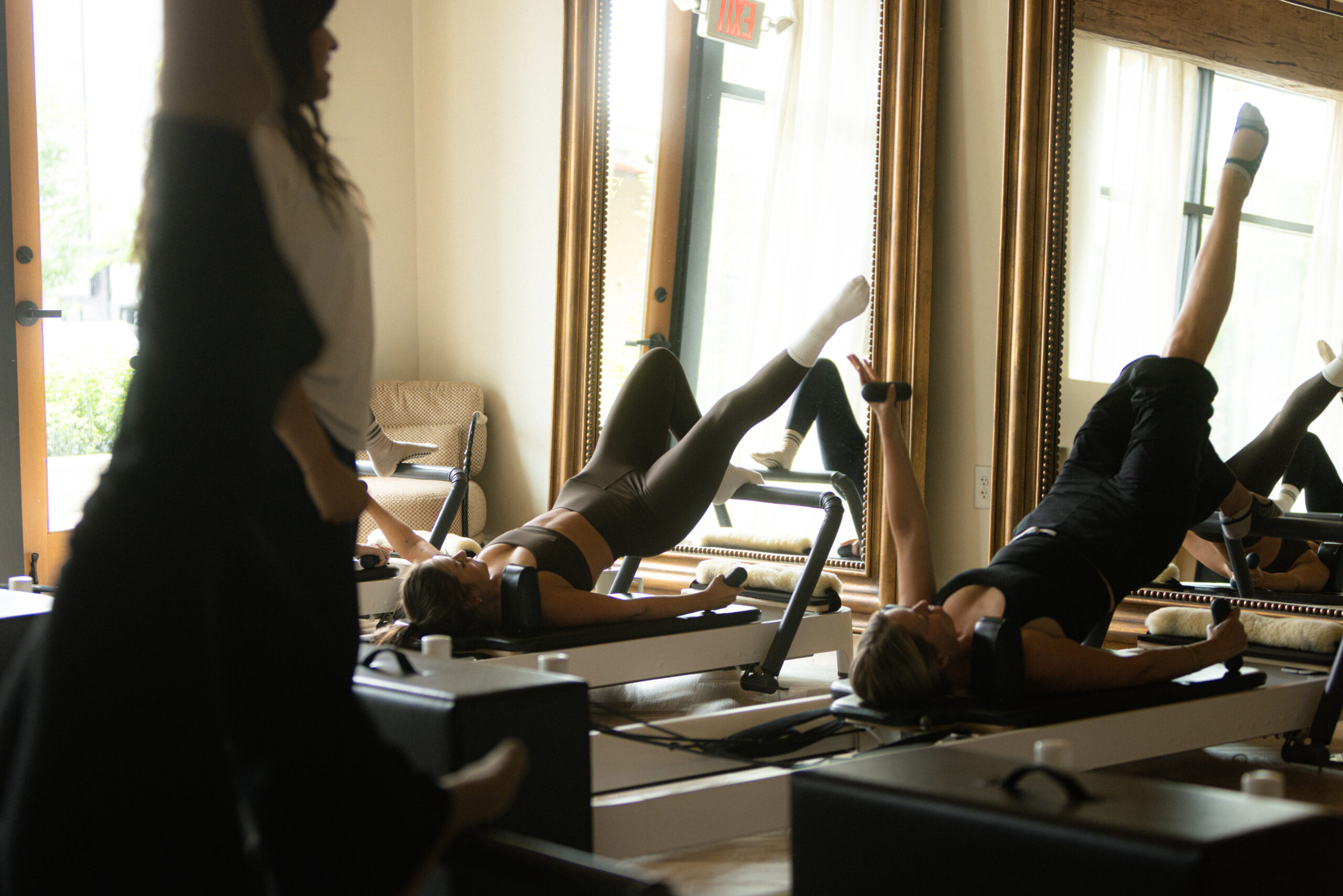
Pilates is having a moment, and everyone at the sold-out Pilates Journal Expo in Miami knew it. For three days (September 11–13) at the Loews Miami Beach Hotel, owners of new studios and long-established businesses traded notes on what’s working and what’s changing.
As Pilates moves from niche to mainstream, the question is how studios can build a business that stands out when everyone is offering the same workout. Read on for our takeaways from the Expo.

1) The boom is real, and so is the competition
On the Standing Out in a Crowded Market panel, Shayan Azizbaeigi, Chief Technology Officer at Xplor Technologies, shared that in 2021 about 17% of studios on Xplor’s platforms offered Pilates. Today it’s close to 48%.
Our customer data shows the same shift. More than half (53%) of studios on Mariana Tek offer Pilates, Lagree, or Megaformer, and 75% of new studio openings in the last year included the Pilates modality. Demand is keeping up: Our 2026 Pilates Report showed that Pilates classes fill at 65% of capacity, compared with a 49% average across all modalities, and 17% of monthly visitors to a Pilates studio are new clients, against 9% in other modalities.
So, the clients are there. What’s changed is that offering reformer classes no longer makes a studio stand out on its own.
“Knowing the data helps us understand more about your positioning. When you talk about branding and how you’re positioning yourself, the words are important, but how do you make that come to life?” – Shayan Azizbaeigi, Chief Technology Officer, Xplor Technologies
2) Don’t race to the bottom on price
A beautiful new studio opens down the street and starts selling $10 intro classes. The instinct is to match it. Shayan’s advice was to take a breath and go back to your foundations.
“You’ll realize that there’s a reason why your foundations have gotten you to the places that they have.” – Shayan Azizbaeigi, Chief Technology Officer, Xplor Technologies
Clients are already paying a premium for Pilates, and they keep paying it. The average Pilates class costs 29% more than the average class across all modalities, and Pilates memberships run 48% higher. Shayan put the average Pilates class at about $26–27 and encouraged owners to keep pushing that number up rather than down.
Michael Ramsey, co-founder of STRONG Pilates, shared that his team raises prices on a regular basis, and about half of the studios in our 2026 customer survey planned to raise class prices in the next two years.
The same discipline applies to third-party booking platforms. Asked about them on the panel, Shayan said they can be a useful way to fill classes, with a caveat: Ask whether these are the right clients for you, and whether they’re helping or hurting your brand. Our data for the upcoming 2027 Boutique Trends Report says to be selective. A third of first-time visitors (33.7%) come through third-party sites, but only 1.9% go on to buy a membership, and it takes them 79 days on average compared with 29 for people who book directly.
3) What retains clients is progress they can feel
The panel was asked what brings clients back long enough to hit a 100-class milestone. Michael’s answer was based on STRONG’s 12-week block programming, and the member surveys they run every three months, across a base of 50,000 members. What they found was a key window for stickiness:
“It’s that 60 to 90 day mark of their journey within the studio that is the stickiness point. If we can keep them up to that 90 day period, we know we can keep them for 15 months plus.” – Michael Ramsey, Co-Founder, STRONG Pilates
What earns those first 90 days is progress clients can measure: Mobility, stability, postural endurance, how long they can hold a movement, how much they’re lifting, how their body is changing. Community and onboarding get people in the door, he said, but results and progression are what keep them for years.
Our data shows how early that window opens and how much is at stake. Only 43% of first-time Pilates clients come back for a second visit, against a 48% average across modalities. Retention then climbs across the first four visits and stays above 90% after that. Get someone past those first weeks and they tend to stay.
4) Consistency is the differentiator, even when it’s not glamorous
When the panel turned to what makes a studio stand out, the answer was execution, rather than programming or design.
“Having really clear SOPs across every department that are executed consistently, not occasionally—that’s what’s going to keep clients coming back, because they’re going to have that consistent experience and they’re going to build trust in your brand.” – Jo Gomez, Director of Athletics, FS8 and Vaura
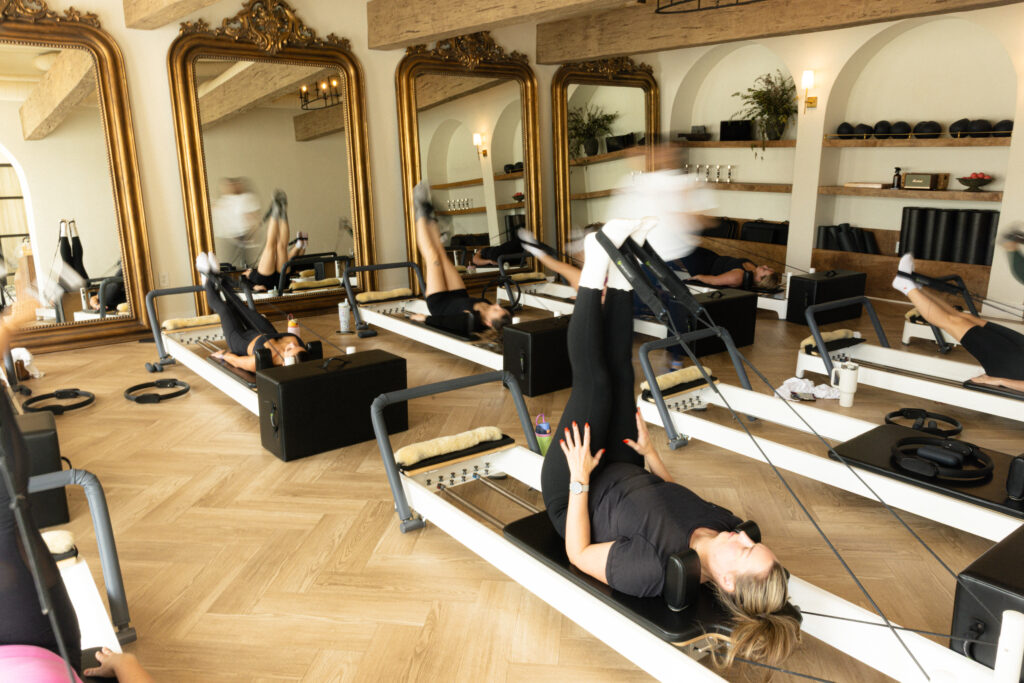
She made it concrete. Do your instructors have a clear way of starting class, e.g. lights down, change the song? If that doesn’t happen every time, clients get a different experience from every instructor instead of a relationship with your studio. Does the front desk stand up, greet the client by name, and walk them to their reformer? These small things are easy to overlook, but they’re what clients notice.
Seran Glanfield, Founder of Spring Three, made the case that systems matter more for small studios, not less. An independent owner doesn’t have a head office, so the structure has to be built in early. That’s what makes hiring, onboarding new teachers, and eventually scaling possible.
Design came up too, and the panel agreed it works at the front end. New lighting and arched mirrors might get someone through the door, but they won’t keep them there. What matters is that the space matches your brand message, that the floors are clean, and that a first-time client can tell where to check in, where to leave their shoes and where to find their reformer.
The same theme ran through another panel—From Instructor to CEO: Leading Studios Beyond Founder Energy—where founders including Christa Gurka, who built her own Pilates and physical therapy studios to more than $12 million in revenue before selling them, talked about what changes as a studio outgrows its founder. Your team needs something to check before they come to you. Two founders who are also moms disagreed about whether they ever fully disconnect on vacation, but both agreed it only works if the systems are in place.
5) Most owners are time-poor, not data-poor
The challenge for owners is that all of this requires information: Utilization, attendance, member behavior, pricing, and retention. But knowing what to look at is different from having time to look at it.
That’s the gap the Mariana Tek MCP connector is built to close. Owners connect their Mariana Tek data to Claude, ChatGPT or another AI tool and ask questions in plain English, like which classes are underfilled this week or which members have gone quiet in the last 30 days. The answer comes back in seconds, in writing or as a chart, with no exporting and no digging through reports.
“We launched an MCP with Claude and ChatGPT. The point wasn’t to get you more into the technology. It was to get you out of the technology.” – Shayan Azizbaeigi, Chief Technology Officer, Xplor Technologies
That’s the idea behind it. The goal is to make the technology owners and operators already use easier to act on. Every answer comes from the studio’s own live data, not generic advice from the internet, and it’s safe by design: The connector reads from Mariana Tek but never changes anything, and it only sees what the person logged in can already see.
Looking ahead
The conversations in Miami suggested some nuance around the Pilates conversation. Pilates isn’t going away, but the playbook for succeeding in Pilates is changing. The studios that will do well are the ones that know their numbers, hold their prices, deliver progress their clients can feel, and build systems that keep the experience consistent even when the founder isn’t in the room.
Ready to build a Pilates business that can scale without losing what makes your brand yours?

by Maddy Crouch Sr Product Marketing Manager, Fitness & Wellbeing
-
First published: September 29 2026
Written by: Maddy Crouch